
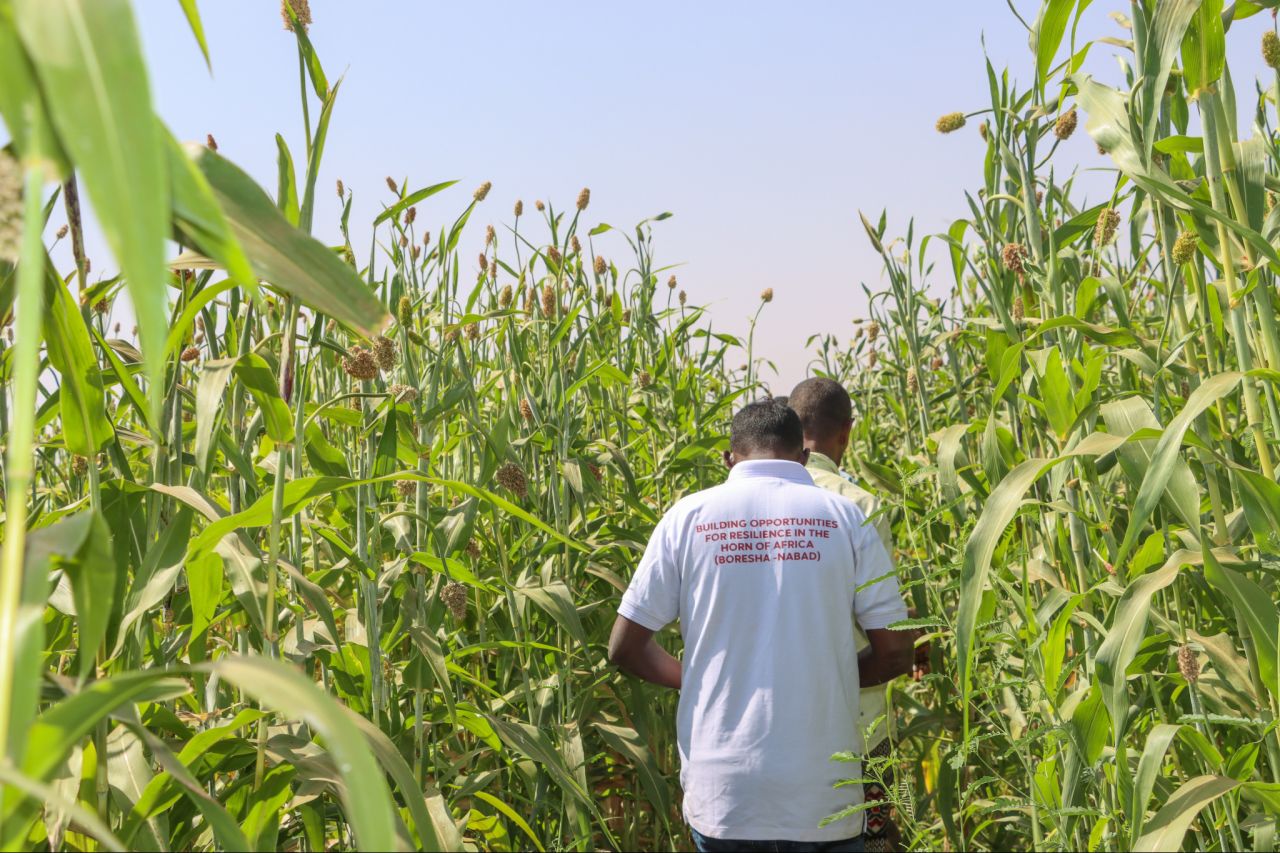
An ambitious land rehabilitation initiative is transforming livelihoods in Ethiopia’s borderlands, where 260 hectares of previously abandoned farmland have been restored to production under the BORESHA-NABAD programme.
The reclaimed land in Dollo Ado and surrounding areas is now producing cereals and livestock fodder, helping drought-affected agropastoral communities improve food security and household incomes while strengthening cross-border trade.
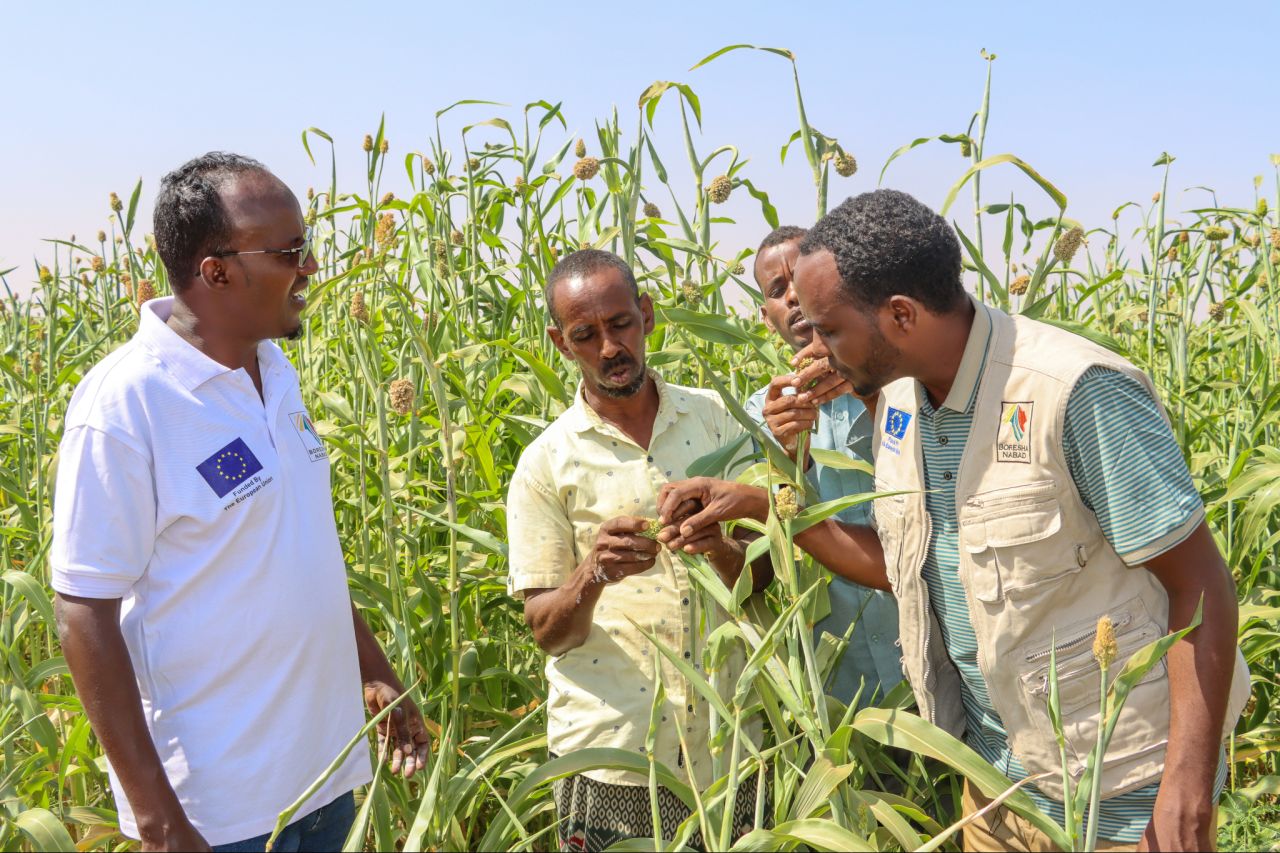
For years, repeated drought, seasonal flooding, and the spread of invasive Prosopis had rendered large tracts of farmland unproductive.
Many farmers abandoned their fields despite growing demand for cereals and livestock feed in local and cross-border markets.
With support from the European Union, BORESHA-NABAD partnered with the Regional Pastoralist and Agro-Pastoralist Development Organisation (RACIDA) and DRC Ethiopia to rehabilitate degraded land and restore agricultural productivity.
The programme facilitated structured linkages between organised farmer groups and agro-input suppliers, enabling farmers to access certified seeds and other essential inputs.
Communities also received support to restore cultivable land through mechanised bush clearing, removal of invasive Prosopis and land levelling.
The restored farmland now supports the cultivation of sorghum, maize, beans and Sudan grass across seven locations.
Increased fodder production is improving feed availability for livestock while providing a steady source of income for farming households.
Improved engagement between farmers and agro-input suppliers has strengthened confidence in agricultural investment, enabling producers to sustain production beyond a single season.
The renewed productivity is contributing to both human food supply and livestock development in the drought-prone region, demonstrating how targeted investments in land rehabilitation and market access can help dryland communities recover from climate-related shocks.
Project partners say the transformation highlights the potential of climate-resilient agriculture to turn degraded landscapes into productive assets, creating new economic opportunities for agropastoral households in Ethiopia’s arid borderlands.