
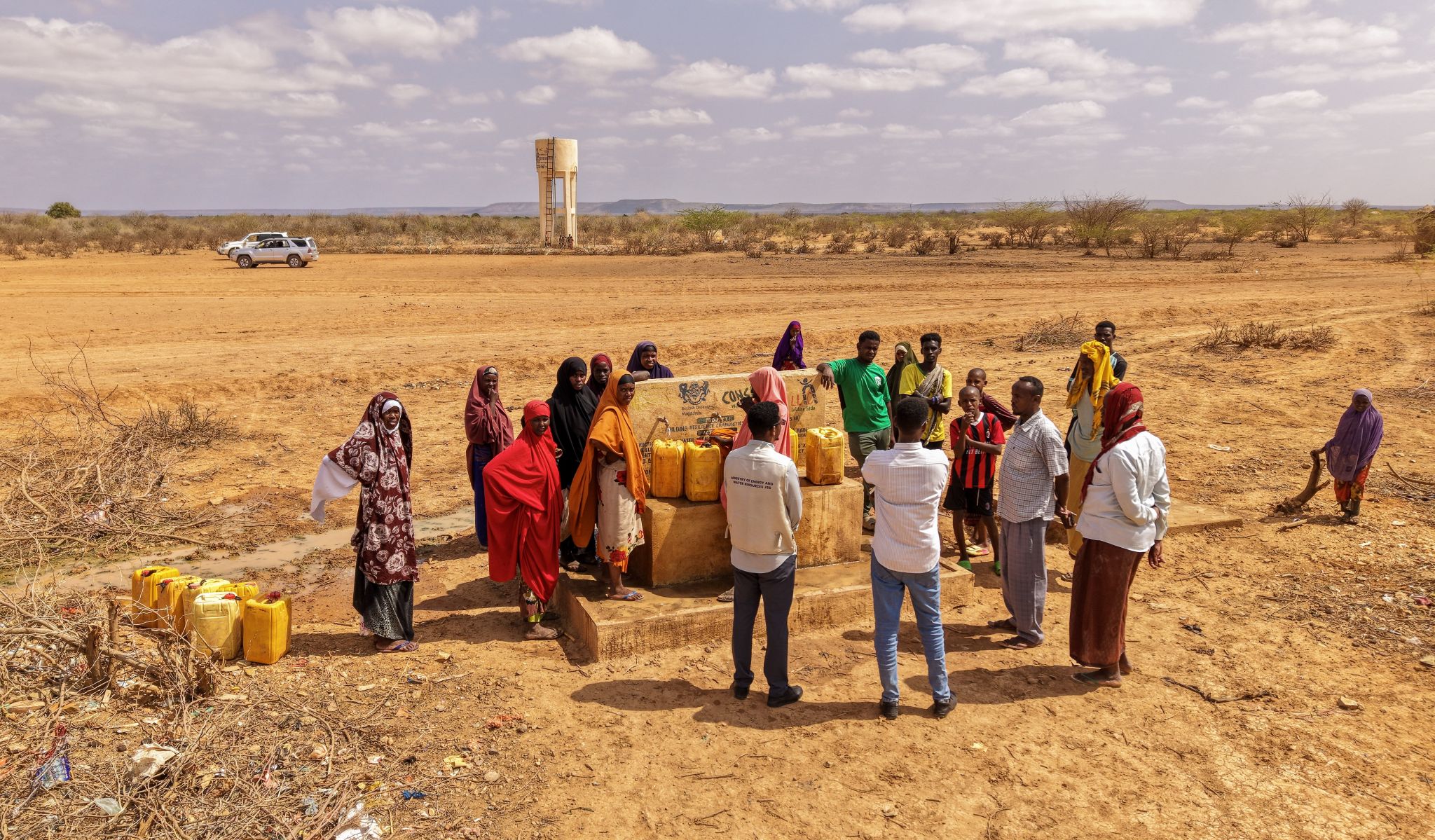
For years, accessing clean water meant an exhausting daily journey for residents of Bay-gal village, who walked several kilometres to the Juba River to collect water for drinking, cooking, and other household needs.
Today, that reality is changing following the completion of a solar-powered water supply system that is transforming lives and strengthening resilience in the community.
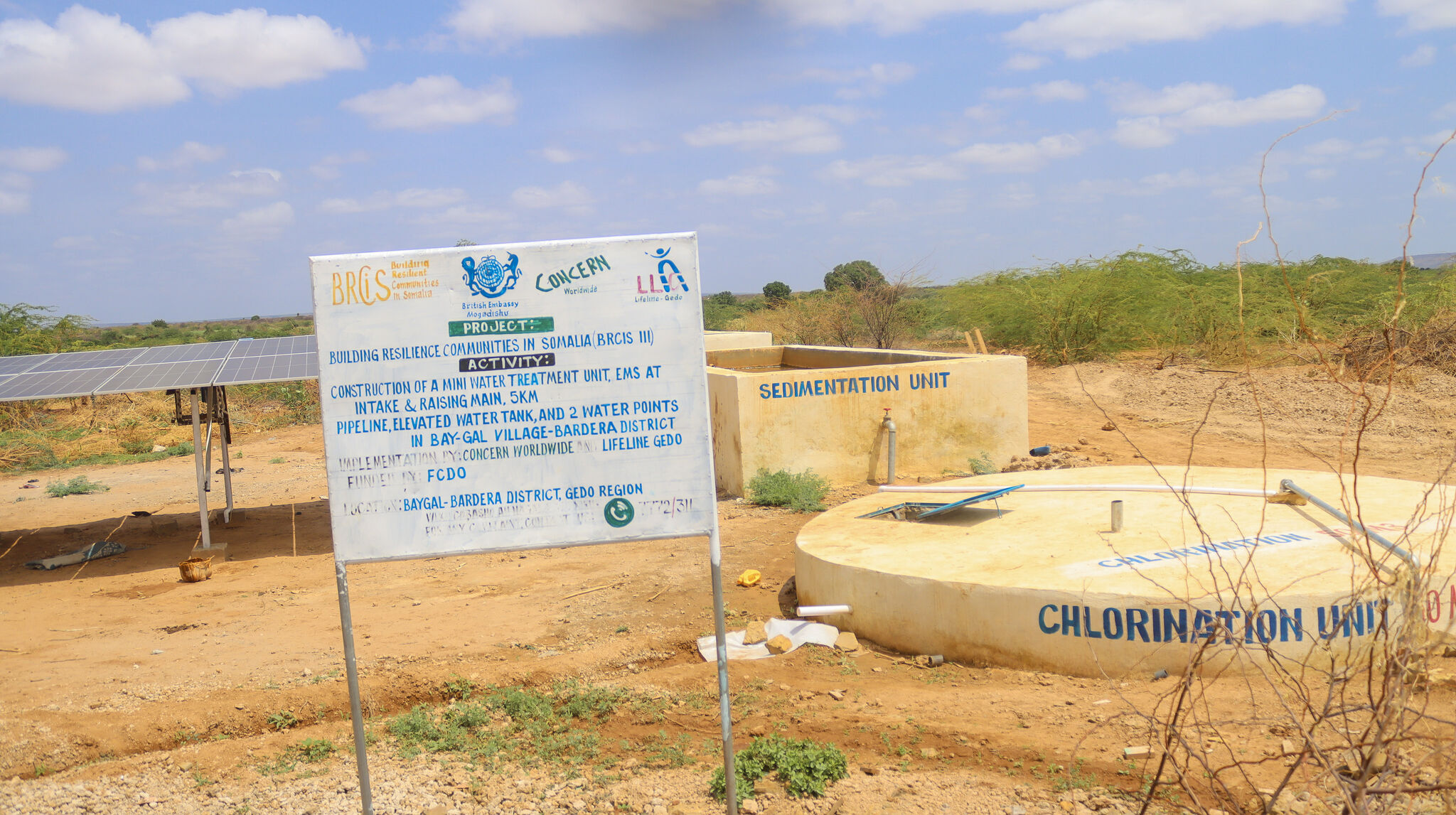
Implemented by Lifeline Gedo (LLG) in partnership with Concern Worldwide through the Building Resilient Communities in Somalia (BRCiS) programme and funded by the UK Foreign, Commonwealth and Development Office (FCDO), the new water system provides reliable access to safe, clean water for Bay-gal and neighbouring villages.
For the residents of Bay-gal, the project represents far more than improved infrastructure.
It is restoring time, improving health, and reducing the burden that for years fell largely on women and children, who spent hours each day travelling long distances to fetch water.
Before the intervention, the absence of a local water source meant that families depended entirely on the Juba River.
During periods of drought and extreme weather, the journey became even more difficult, exposing households to health risks, lost productivity, and limited opportunities for education and income-generating activities.
The newly established solar-powered water system now brings clean water closer to people's homes, significantly reducing the time spent searching for water and ensuring a more reliable, sustainable supply year-round.
Residents say the availability of clean water is already improving hygiene and sanitation practices, contributing to better health outcomes and reducing the incidence of waterborne diseases.
Families also have more time to devote to farming, livestock keeping, education, and other livelihood activities that were previously interrupted by the daily search for water.
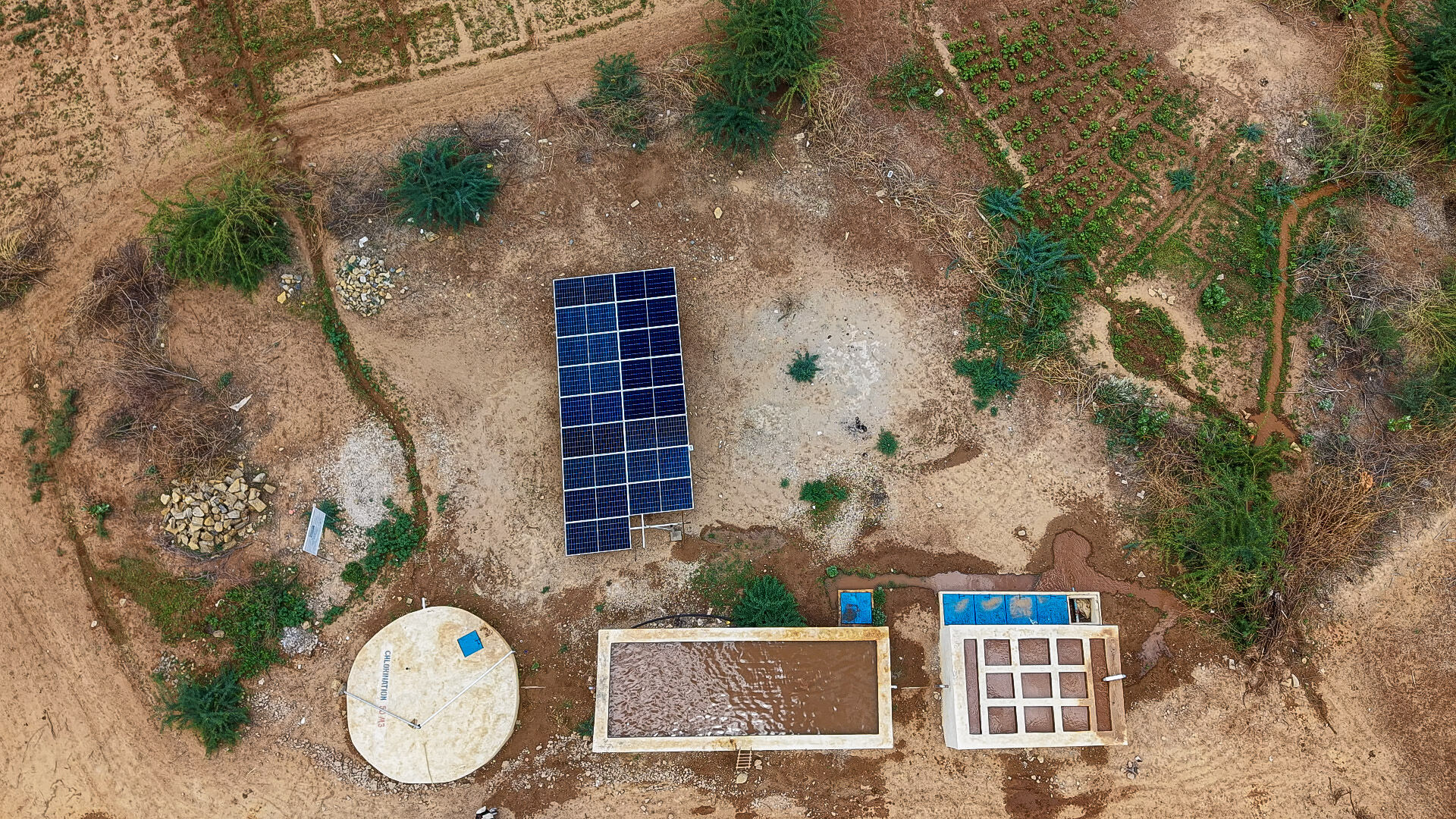
The project reflects a broader commitment by the BRCiS programme to strengthen the resilience of communities facing the impacts of climate change, recurrent drought, and protracted humanitarian challenges across Somalia.
By investing in sustainable infrastructure powered by renewable energy, the initiative is helping communities adapt to changing environmental conditions while improving access to essential services.
The use of solar technology also ensures that the water system can operate efficiently with lower running costs, making it a more sustainable solution for rural communities where access to conventional energy sources remains limited.
Beyond Bay-gal, neighbouring villages are also benefiting from the improved water supply, reducing pressure on existing water sources and promoting greater cooperation among communities that rely on shared natural resources.
Lifeline Gedo and Concern Worldwide say the project demonstrates how partnerships between local organisations, international development partners, and communities can deliver practical solutions that improve everyday life while strengthening long-term resilience.
As climate change continues to intensify water scarcity across the Horn of Africa, investments in sustainable water infrastructure are becoming increasingly critical to protecting livelihoods, improving public health, and supporting community stability.
For the people of Bay-gal, the solar-powered water supply system marks the end of years of hardship and the beginning of a future where clean water is no longer a daily struggle, but a reliable resource that supports healthier families, stronger livelihoods, and more resilient communities.