
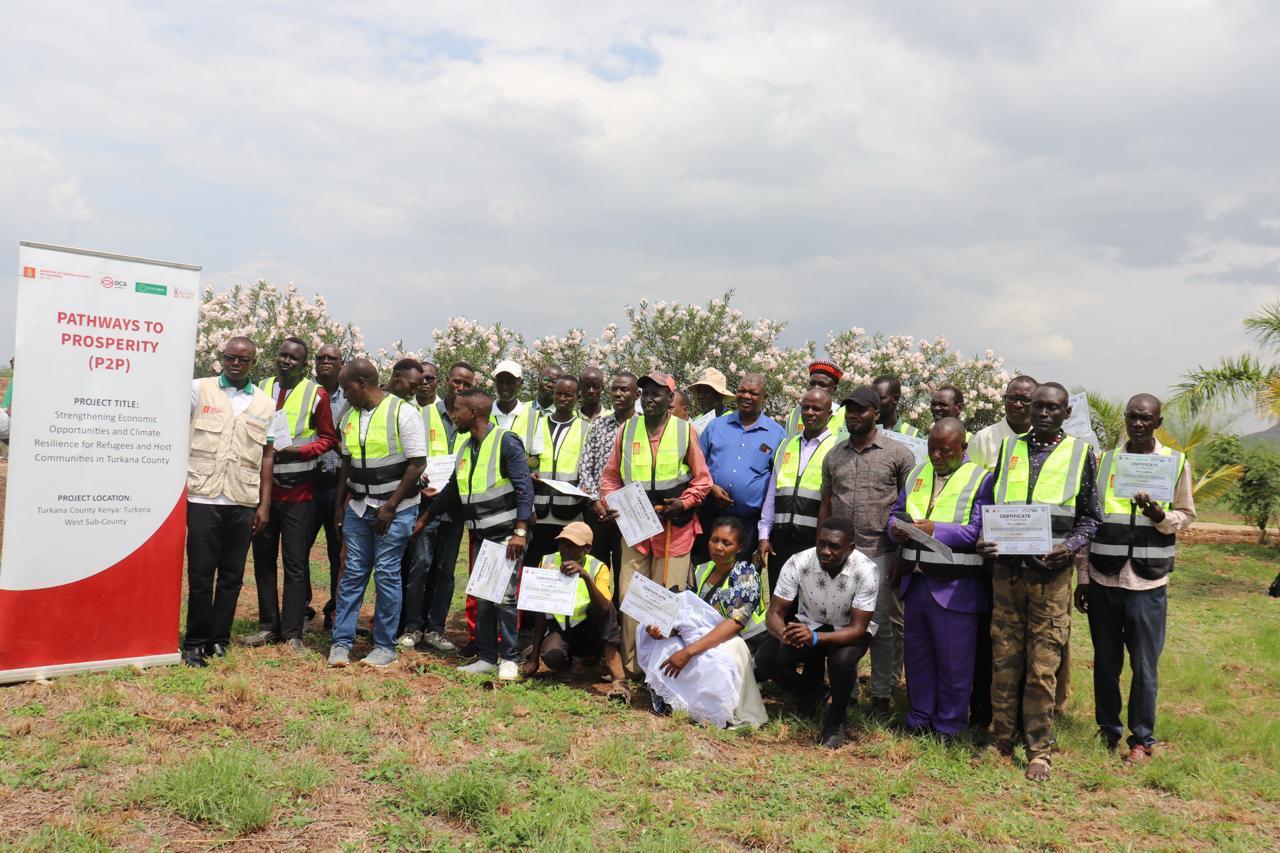
At least 20 newly trained Community Animal Disease Reporters (CADRs) have been certified and equipped with reflector jackets after completing a 21-day intensive training in Kakuma, Turkana West Sub-County.
The trainees, drawn from Kakuma, Kalobeyei, Letea, and Lopur Wards, will play a vital role in scouting for livestock disease outbreaks and reporting cases to the County Veterinary Office in Lodwar for rapid response.
Among the graduates were three refugees from Kakuma Refugee Camp: Tengeneza Emmanuel, Bernard Lusema, and Kayandi Cedrik, marking the first time refugees have been formally integrated into Turkana County’s community-based livestock disease surveillance system.
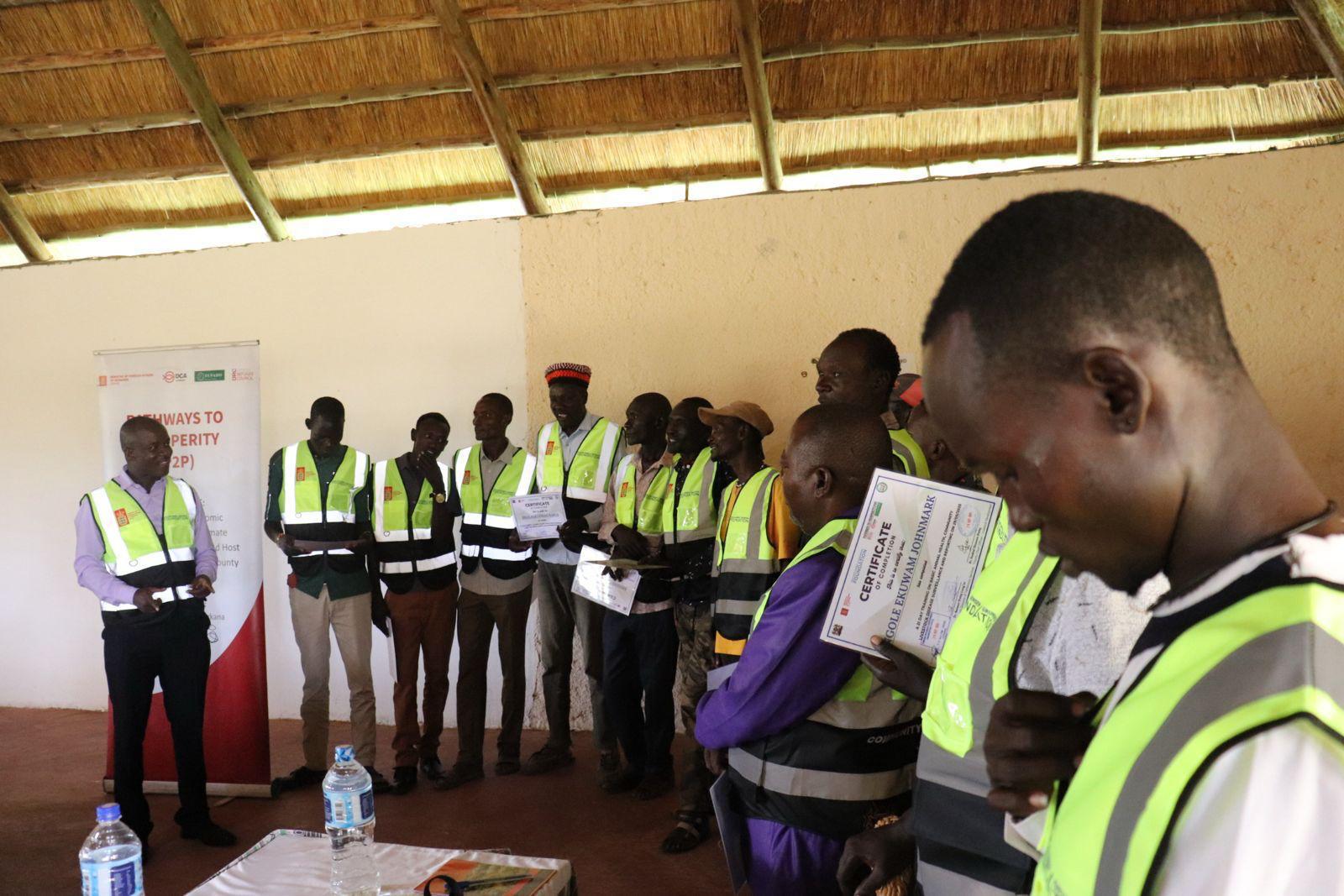
Speaking during the certification ceremony, Dr. Benson Long’or, the County Director of Veterinary Services, lauded the milestone as a demonstration of the county government’s commitment to maintaining a healthy and disease-free livestock sector.
“I am particularly proud that, for the first time, we have integrated refugees into our community disease surveillance network. I hope that other partners in Turkana West can emulate this inclusive model in future trainings,” said Dr. Long’or.
The training was conducted under the Pathways to Prosperity (P2P) Project, jointly implemented by the County Government of Turkana, Turkana Pastoralist Development Organisation (TUPADO), Danish Refugee Council (DRC), and Dan Church Aid (DCA).
The initiative seeks to strengthen local capacity for livestock health management through training, mass vaccination, and community outreach.
Dr. James Keben, TUPADO’s Veterinary Field Coordinator, noted that the ongoing partnership with the county government has so far resulted in the training of 54 CADRs in Turkana West.
“In addition to the 20 newly trained, 34 CADRs have received refresher training. This growing network will ensure early detection and response to animal diseases,” Dr. Keben said.
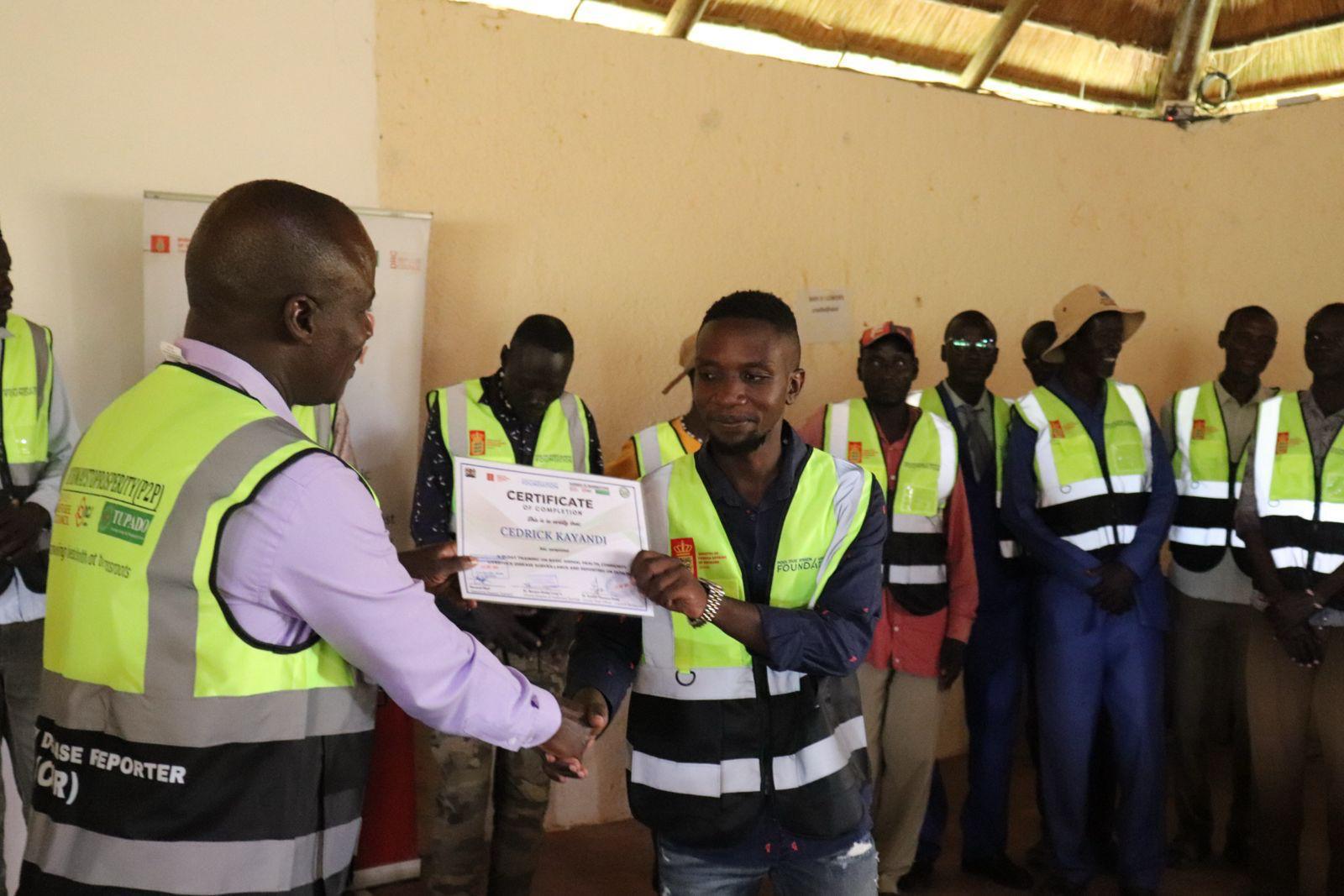
The P2P Project also continues to facilitate livestock vaccination campaigns, including the immunisation of over 113,000 sheep and goats against Peste des Petits Ruminants (PPR) in previous rounds.
Trainee Kidirio Etaan from Namon village in Lopur Ward expressed gratitude for the training, emphasising its value in improving local livestock health.
“This certification distinguishes us from quacks pretending to be livestock experts. With more trained reporters, we can protect our animals and livelihoods,” he said.