
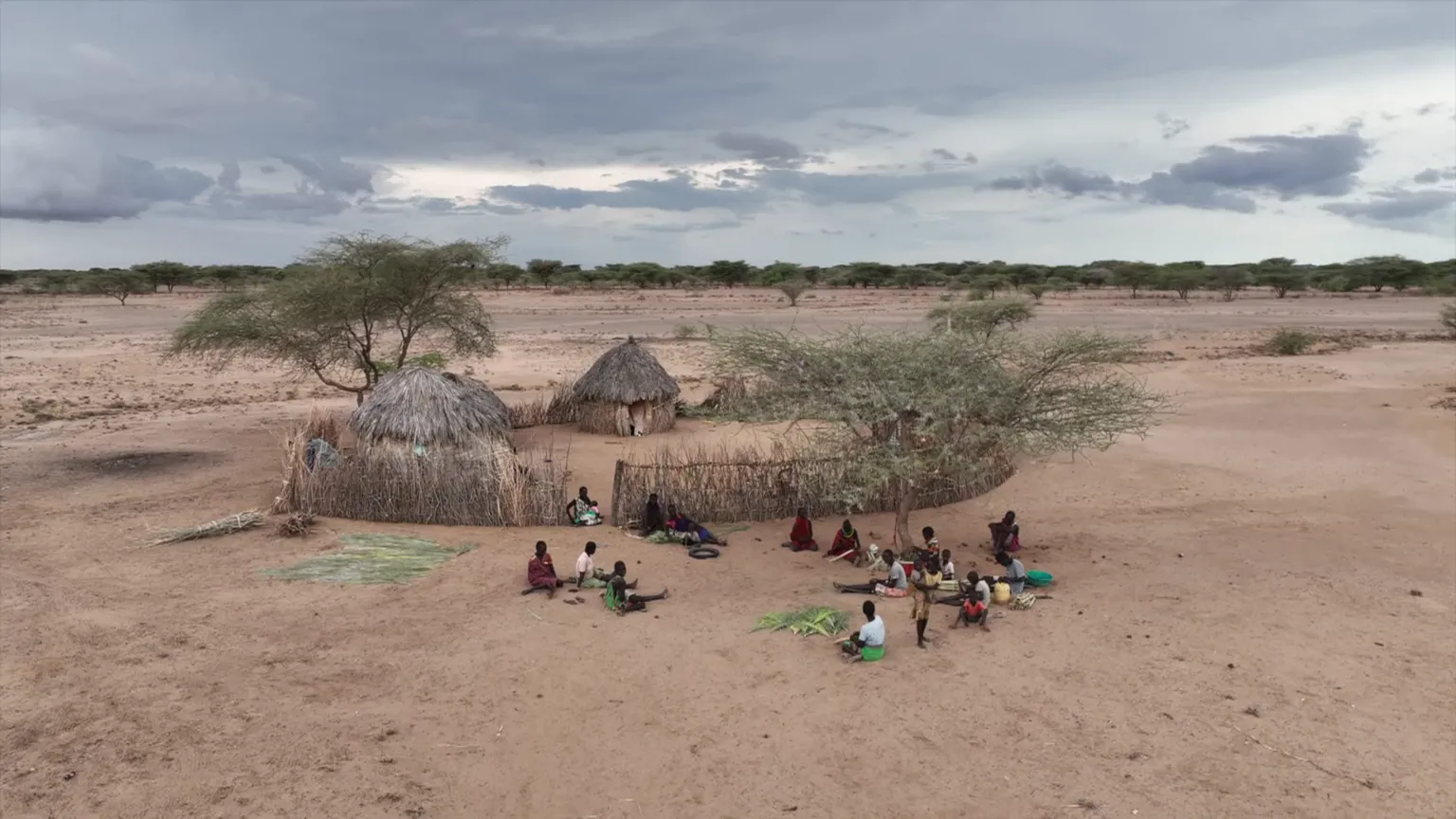
In the arid plains of Turkana County, where drought has withered pasture and wiped out livestock, families are increasingly turning to wild food sources to survive, among them the fruit of the gingerbread tree, locally known as mikwamo.
For residents like Lotkoy Ebey, the effects of the prolonged drought have been devastating.
Once the owner of 50 goats, she now has only five left after the rest succumbed to lack of pasture and water.
In a region where livestock are central to both livelihood and culture, such losses are catastrophic.
“Sometimes we go for days without a proper meal,” she says.
“When there is nothing, we go into the bush to look for anything we can eat.”
Across Turkana, the landscape tells a similar story. Dry riverbeds cut across the land, grazing fields have turned barren, and livestock carcasses dot the ground.
Despite recent rains in parts of the country, experts warn that the impact in Turkana has been minimal due to uneven and unpredictable rainfall following consecutive failed rainy seasons.
With food increasingly scarce, communities have turned to the gingerbread tree as a last resort.
In villages such as Kakwanyang, women gather under sparse trees, pounding the hard brown fruits into a coarse meal. Once considered a snack, the fruit has now become a primary source of sustenance.
“We eat these because of hunger,” says Regina Ewute Lokopuu, one of the women preparing the fruit. “There is nothing else.”
The fruit, which has a gingerbread-like taste, can provide temporary relief from hunger but comes with limitations. Consumed in large quantities, it can cause stomach discomfort and drowsiness.
To make it more tolerable, families sometimes mix it with maize flour, if they can afford it, creating a basic meal to stretch their limited resources.
Finding the fruit itself is not easy. Villagers often walk for hours into the scrubland in search of the trees, a physically demanding journey made harder by hunger and dehydration.
The drought has also strained traditional coping mechanisms. Humanitarian food assistance, once a critical lifeline, has become less consistent.
Many families report receiving little or no aid in recent months, leaving them increasingly vulnerable.
According to local authorities, more than 320,000 people in Turkana are in urgent need of food assistance, while millions more across Kenya face food insecurity.
Livelihoods have been disrupted, forcing many men to migrate in search of pasture and water, leaving behind women, children, and the elderly.
Aid agencies, including the Kenya Red Cross Society, the World Food Programme, and World Vision Kenya, are working to deliver food assistance to the most affected households.
However, officials acknowledge that available resources fall far short of the growing need.
“We have only limited supplies, which cannot reach everyone,” said a local humanitarian coordinator, calling for additional support from partners and donors.
Even as relief efforts continue, the crisis underscores deeper structural challenges.
Across East Africa, prolonged drought has left an estimated 26 million people facing extreme hunger, according to Oxfam.
In Turkana, hopes for recovery remain uncertain. While some rainfall has been recorded, officials caution that it may not be sufficient to restore water sources or revive pasture in the short term.
For families like Ebey’s, survival depends on resilience and on what little nature can still provide.
Each day is a struggle to find food, water, and hope in a landscape where both have become increasingly scarce.
As the drought persists, the reliance on wild foods like the gingerbread tree highlights the severity of the crisis and the urgent need for sustained humanitarian support and long-term solutions to build resilience in Kenya’s most vulnerable regions.