
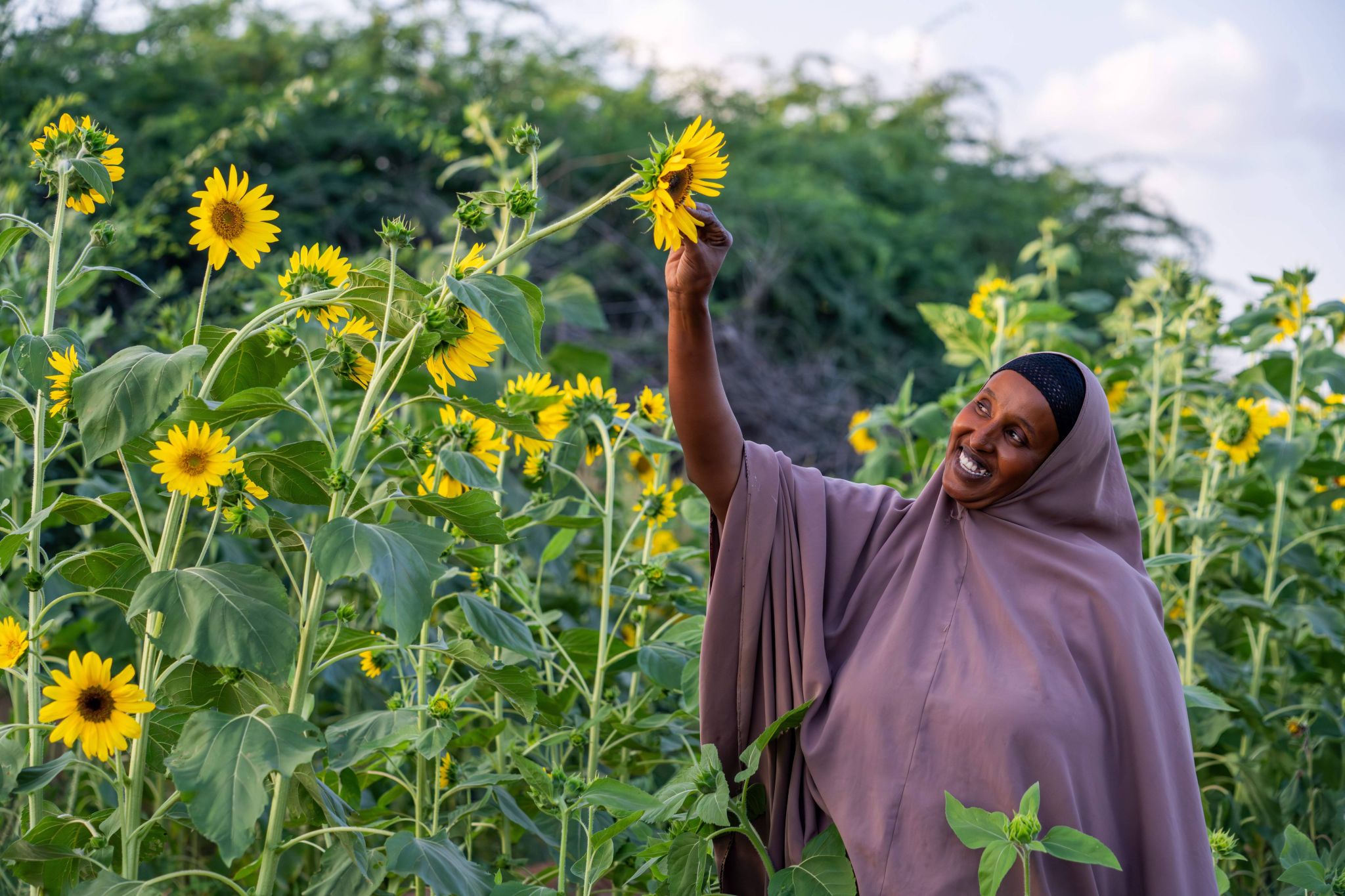
Deka Aden Hussein, a mother of four from Mandera County, has strengthened her nutrition and maternal health knowledge through the Hanaano Programme.
Through community farming, savings groups and livestock rearing, Deka’s experience highlights Hanaano’s approach to improving family nutrition and resilience.
Hanaano Phase II will build on three years of implementation and research to address barriers preventing children from accessing nutritious diets.
Deka Aden Hussein, a mother of four from Mandera County, has strengthened her knowledge of nutrition and maternal health through the Hanaano Programme, while participating in activities aimed at improving her family’s resilience.
According to the programme, Deka’s involvement in community farming, savings groups and livestock rearing illustrates how community-led interventions can support family nutrition and wellbeing.
Her experience comes as Hanaano prepares for its second phase, which will build on three years of implementation, community engagement and research by Tufts University.
Hanaano Phase II will place greater emphasis on addressing the barriers that prevent children from accessing nutritious diets. Its priorities include deeper investment in locally available nutritious food, water quality testing and analysis, stronger milk value chains, improved market access and financial inclusion.
The programme says thousands of women like Deka will benefit from the next phase, with communities continuing to play a central role in shaping solutions that improve nutrition, resilience and wellbeing.
Implementation will continue alongside RACIDA, Lifeline Gedo and Pastoralist Concern. The approach recognises the importance of local leadership and community participation in sustaining progress.
Hanaano also highlighted a strengthened partnership between Concern Worldwide, UNICEF and the World Health Organization. Colleagues from the organisations met to discuss closer collaboration during Phase II, including stronger connections between community realities and global frameworks.
The partnership seeks to bring local evidence into policy and practice, helping ensure that nutrition interventions respond to the challenges families face.
The next phase follows the Government of Ireland’s announcement at the 81st United Nations General Assembly of a €96 million investment to tackle child malnutrition and hunger across Africa.
Hanaano welcomed the commitment at a time when global development assistance is under pressure, describing it as support for communities facing persistent barriers to adequate nutrition.
For mothers such as Deka, the programme’s focus connects nutrition knowledge with farming, savings and livestock activities that support household resilience. Her experience illustrates the community-centred approach Hanaano intends to deepen in its next phase.