
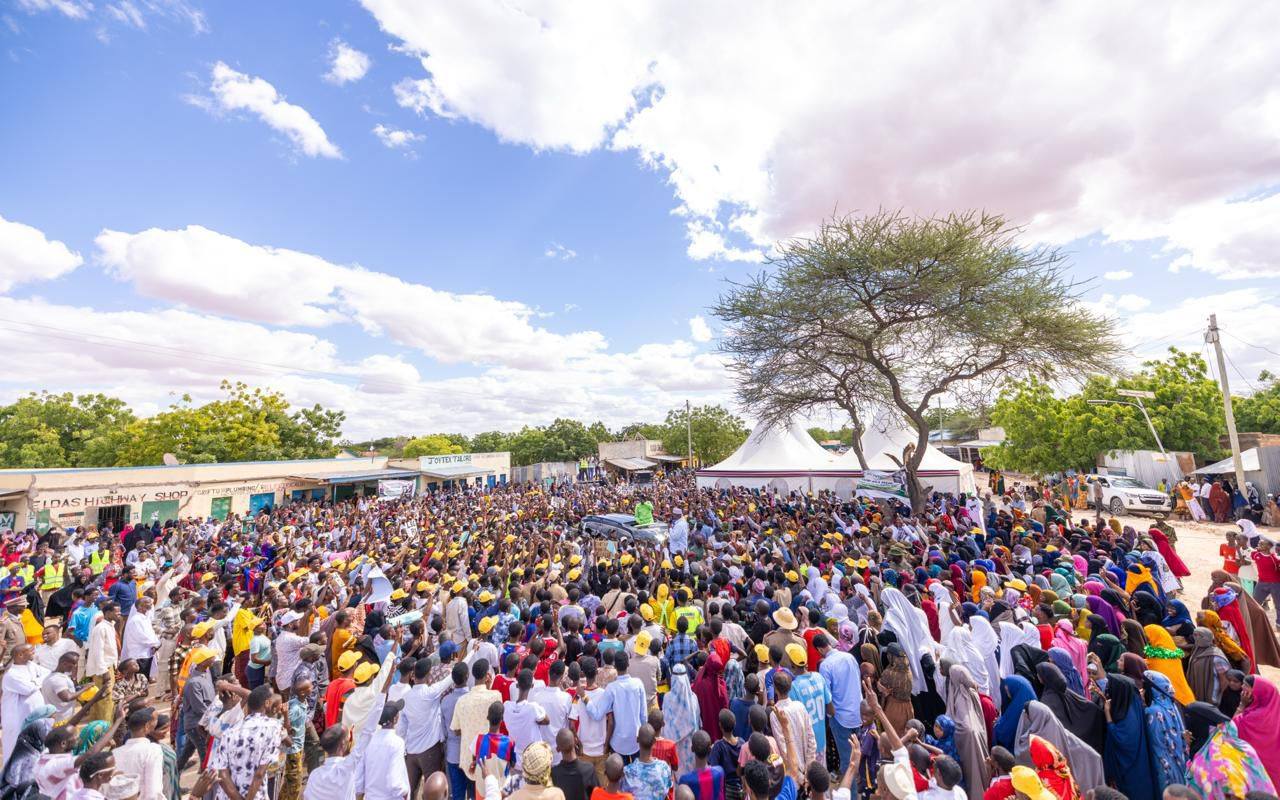
The government has deployed an additional 2,000 agripreneurs to Arid and Semi-Arid Lands (ASAL) counties as part of a nationwide strategy to accelerate agricultural transformation, strengthen pastoral livelihoods, and enhance climate resilience in some of the country's most vulnerable regions.
President William Ruto announced the deployment during the 2026 Madaraka Day celebrations held in Wajir County, describing the initiative as a key component of the government's efforts to modernise agriculture and improve economic opportunities for pastoralist communities.

The newly deployed agripreneurs will provide last-mile agricultural advisory services, connect farmers and pastoralists to markets and financial services, and support the transition towards climate-smart agro-pastoralism.
“Today, we are also deploying an additional 2,000 agripreneurs for our ASAL counties, seated right here in our midst. They will provide last-mile agricultural advisory services, connect pastoralist communities to markets and finance, and support the transition to climate-smart agro-pastoralism and more resilient livelihoods,” President Ruto said.
The latest deployment raises the total number of agripreneurs operating across the country to 7,000, building on an existing network of 5,000 officers already working with farmers and livestock keepers.
“Together with the 5,000 already in place, we now have 7,000 agripreneurs driving agricultural transformation across our country,” the President added.
The initiative forms part of broader government efforts to unlock the economic potential of Kenya's pastoral and livestock sectors by improving productivity, strengthening value chains, and expanding access to markets.
According to President Ruto, the impact of these interventions is already evident in the performance of the livestock industry, which has recorded significant growth in recent years.
“The results of these deliberate interventions are already visible. Meat exports have increased by 84 per cent from Kenya shillings 8.9 billion in 2022 to Kenya shillings 16.4 billion in 2025,” he said.
The President also highlighted strong growth in dairy production and exports, noting that milk production has risen from 4.6 billion litres to 5.3 billion litres during the same period.
Meanwhile, dairy exports have nearly tripled, increasing from KSh 4.9 billion to KSh 14.2 billion.
“Milk production has increased from 4.6 billion litres to 5.3 billion litres, while dairy exports have grown from KSh 4.9 billion to KSh 14.2 billion,” President Ruto stated.
The government says the deployment of agripreneurs is helping bridge critical gaps in agricultural extension services, particularly in remote pastoral regions where farmers and livestock keepers have historically had limited access to technical support, market information, and financial services.
By working directly with communities, agripreneurs are expected to promote improved livestock management practices, climate adaptation measures, disease surveillance, value addition, and business-oriented farming approaches.
The programme is also intended to strengthen resilience against climate shocks, including recurrent droughts that have frequently affected livelihoods in ASAL counties.
President Ruto said the gains being recorded in the livestock and dairy sectors are already translating into tangible benefits for communities.
“These gains are translating into higher income for livestock and pastoral communities, stronger markets for producers, and greater confidence in the future of the pastoral economy,” he said.
Agriculture remains one of the key pillars of the government's Bottom-Up Economic Transformation Agenda (BETA), with a strong focus on increasing productivity, improving food security, and creating economic opportunities in rural areas.
The expansion of the agripreneur programme is expected to further strengthen Kenya's livestock sector while supporting the transition from traditional subsistence systems towards more commercially viable and climate-resilient agricultural enterprises.
As the government scales up support for pastoral and farming communities, officials say the agripreneurs will play a central role in ensuring that innovations, technologies, and market opportunities reach even the most remote parts of the country, helping to drive inclusive agricultural growth and sustainable rural development.