
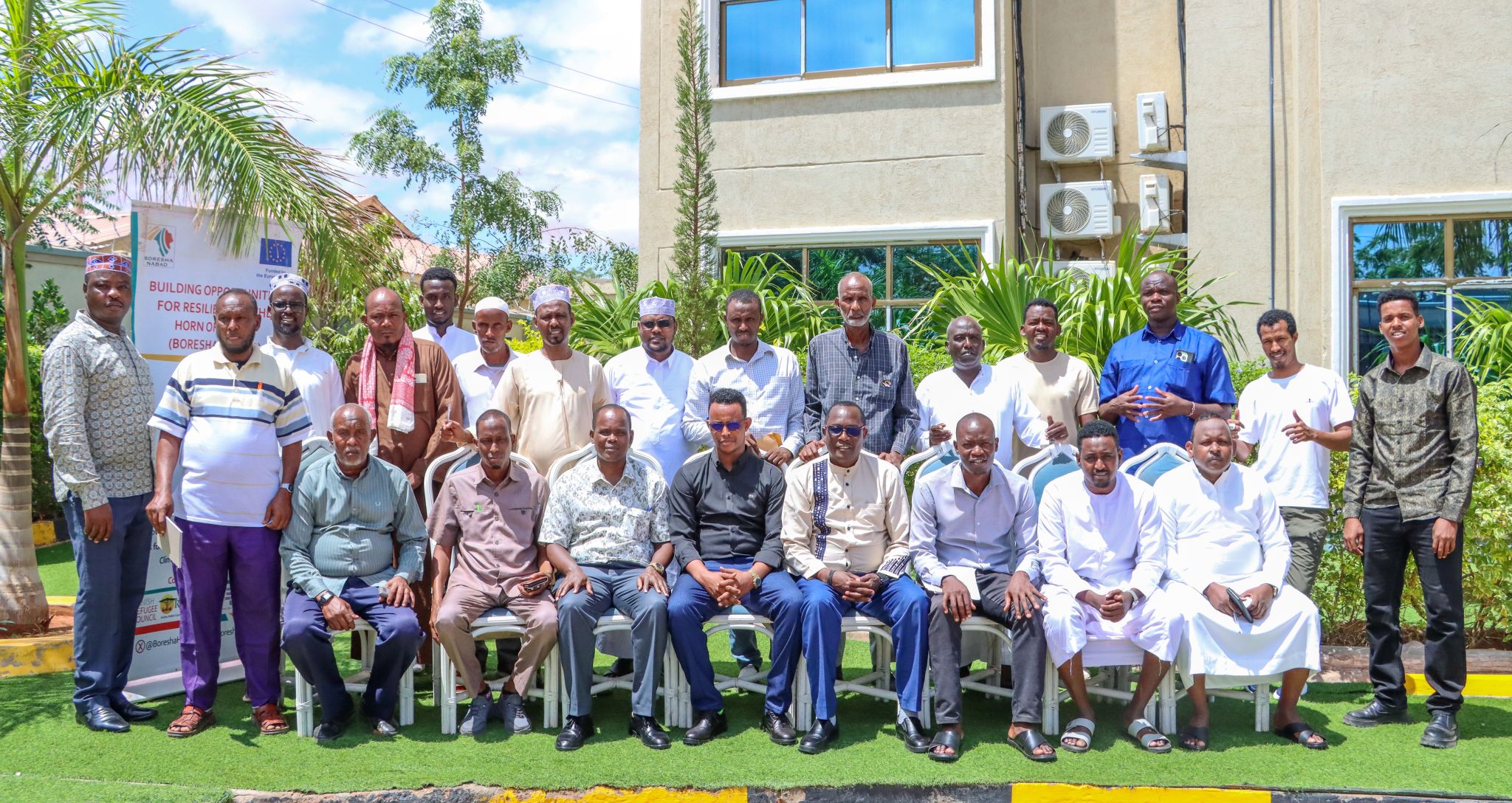
Kenyan and Ethiopian border officials held a two-day engagement to address small-scale trade barriers and advance the Simplified Border Trade Regime.
BORESHA-NABAD facilitated discussions on improving border coordination and easing trade procedures for communities across the Mandera Triangle.
Border authorities proposed a joint technical committee, regular coordination meetings, and aligned local trade practices to support cross-border commerce.
Kenyan and Ethiopian border officials have held a two-day stakeholder engagement to address barriers to small-scale cross-border trade and advance the implementation of the Simplified Border Trade Regime in the Mandera Triangle.
The engagement, facilitated by BORESHA-NABAD through the Danish Refugee Council (DRC) in Kenya and Ethiopia, brought together Border Management Committees comprising administrators, customs officials, trade department representatives and other relevant border authorities from both countries.
According to BORESHA-NABAD, small-scale and informal traders in the Mandera Triangle face complex procedures, administrative barriers and changing operating conditions. These challenges affect household incomes in communities that depend on markets across the border for everyday trade.
Kenya and Ethiopia signed the Simplified Border Trade Regime in Mombasa in April 2025 to ease trade for licensed small-scale traders in border areas.
The arrangement allows eligible traders to trade a common list of 50 products worth up to USD 1,000 per month over a maximum of four trips, without a certificate of origin. It also seeks to facilitate women’s participation in formal cross-border trade.
The stakeholder discussions focused on translating the bilateral commitments into practical action through stronger local coordination and measures to address implementation barriers.
Among the key action points was a review of Border Management Committee membership to include relevant government agencies and stakeholders that are not yet represented.
Participants also identified the establishment of a joint cross-border technical committee as a priority. The proposed committee would lead awareness-raising, coordination and monitoring of the trade regime’s implementation.
Other action points included reinvigorating monthly government-to-government coordination meetings between Kenyan and Ethiopian border authorities to address emerging operational challenges.
The engagement further called for aligning existing local cross-border trade by-laws and practices with the simplified trade regime to support smoother implementation.
To broaden institutional engagement, participants proposed involving Border Management Committees in scheduled cross-border meetings with authorities from Dawa, Mubarak and Liben Zone, alongside the Mandera County Security Committee.
The discussions build on the earlier BORESHA programme’s work with Tri-Border Business Committees, which provide platforms for business communities to engage border authorities, address trade challenges and strengthen market linkages.
Supported by the European Union and Danida, BORESHA-NABAD continues to facilitate cross-border policy dialogue and institutional coordination. These efforts aim to support regional economic integration, expand market opportunities for women and youth, and promote peaceful coexistence across the Mandera Triangle.