
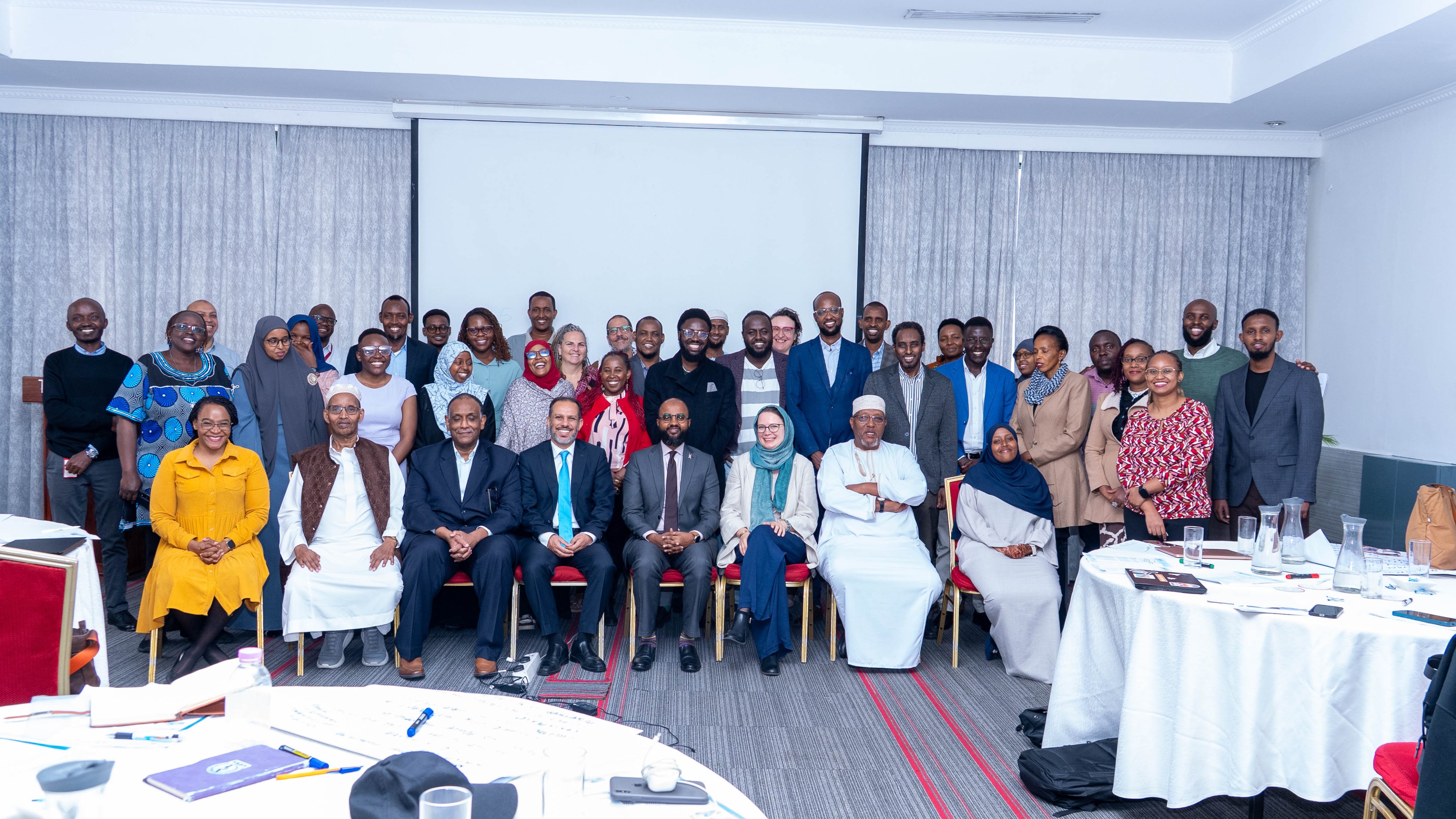
The Kenya Red Cross Society has convened a high-level, multi-stakeholder consultation bringing renewed focus to the role of Islamic philanthropy in advancing the protection and wellbeing of displaced and vulnerable women across East Africa.
The dialogue, held under the Making Aid Work for Displaced Women initiative led by the University of Birmingham, brought together a diverse group of humanitarian actors, faith-based organisations, policymakers, researchers, and international partners.
The International Centre for Humanitarian Affairs (ICHA) co-facilitated the session alongside key collaborators including the International Federation of Red Cross and Red Crescent Societies (IFRC), Islamic Relief, the United Nations High Commissioner for Refugees (UNHCR), and Irish Aid.
The consultation aimed to explore how Islamic philanthropy, often rooted in principles of compassion, solidarity, and social justice, can be more effectively leveraged to support women affected by displacement and crisis.
Participants examined practical ways to align faith-based giving with formal humanitarian systems to enhance impact, sustainability, and inclusivity.
A key outcome of the meeting was the establishment of a regional working group tasked with strengthening partnerships and advancing coordinated support for displaced women across East Africa.
The group is expected to drive collaborative action, generate evidence, and inform policy and programming at both national and regional levels.
In her opening remarks, ICHA Executive Director Safia Verjee highlighted the shifting dynamics of Kenya’s humanitarian landscape, pointing to the government’s Shirika policy, which promotes greater inclusion between host communities and refugees.
She noted that this transition from protection-focused approaches to integration-oriented responses is reshaping how humanitarian assistance is designed, financed, and delivered.
Verjee also raised concern over declining levels of Official Development Assistance, warning that reduced global funding is placing increased pressure on humanitarian systems.
In response, she emphasized the growing importance of local organisations and community-based mechanisms, as well as the critical yet often under-recognised role of faith-based giving, including Islamic philanthropy.
“This consultation is focused on strengthening collaboration, grounding action in local realities, and generating evidence to inform policy and practice,” she said.
Also addressing the forum, Kenya Red Cross Secretary General Dr. Ahmed Idris called for greater global solidarity in addressing humanitarian crises.
He urged leaders to take a more proactive stance against injustices and underscored that Islamic philanthropy transcends religious boundaries.
“Islamic philanthropy is not confined to religion, it is about alleviating human suffering regardless of race, gender, or belief,” he stated.
The consultation further highlighted the diverse experiences of displaced women, challenging one-dimensional narratives and emphasizing their agency and resilience.
Participants noted that while displaced women face complex and often intersecting challenges, they also play a central role in leading and sustaining their communities.
The forum forms part of a broader consortium effort involving institutions such as the University of Nairobi, Kenyatta University, Trócaire, Jamia Mosque Nairobi, the Refugee Youth Education Hub, NACADA, UNEP, and the Red Cross Red Crescent Global Migration Lab East Africa, among others.
As stakeholders continue to explore innovative and inclusive approaches to humanitarian response, the outcomes of this dialogue are expected to shape future interventions and strengthen support systems for displaced women across the region.