
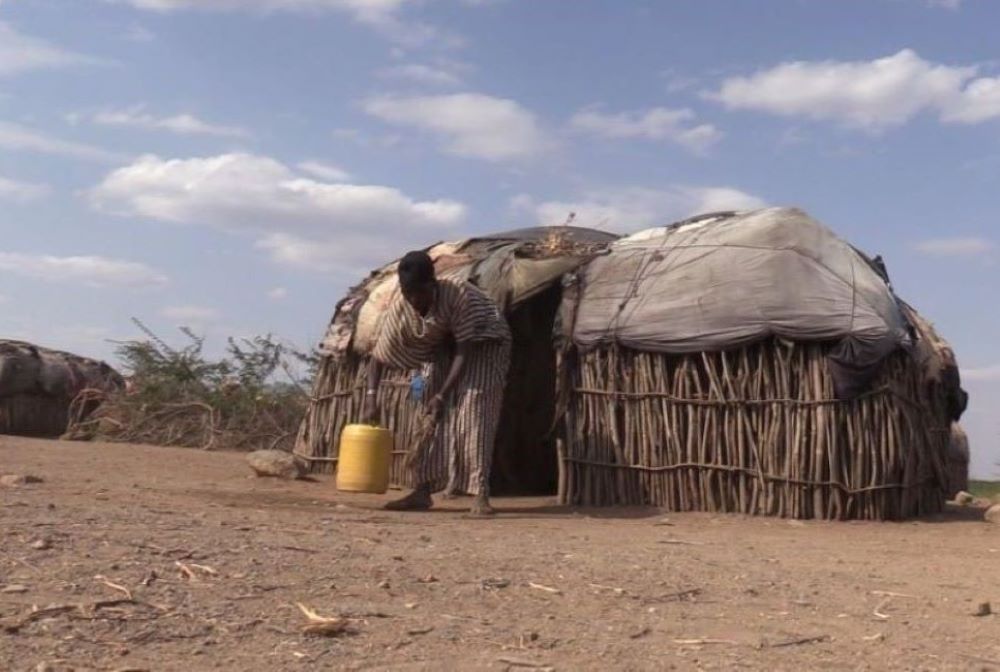
In the searing heat of northern Kenya’s semi-arid plains, where the earth cracks under years of drought, 27-year-old Jemima Cheruto leans on her hoe and surveys her small plot of sorghum and onions.
Once a herder, she lost her entire livestock to drought, and with it, her livelihood, her safety, and her sense of worth.
“He used to beat me because I couldn’t provide for the family,” she said quietly of her husband.
“One day, he carried a machete. I ran with my children and never went back.”
Cheruto’s story is one of survival in the face of climate devastation, and a testament to the strength of African women standing on the frontlines of a warming world.
As world leaders prepare for the COP30 climate summit in Belém, Brazil (November 10–21), women like her are demanding a global deal that acknowledges not just carbon emissions, but the gendered cost of climate change.
Across Kenya and much of the Horn of Africa, climate change has deepened inequalities, leaving women and girls to bear the harshest burdens.
Years of drought and erratic rainfall have decimated crops, killed livestock, and forced millions from their homes.
According to the UN Refugee Agency (UNHCR), over 2.3 million people have been internally displaced in Ethiopia and Somalia due to drought, and many of them are women and children.
In Marsabit County, near the Ethiopian border, Fatuma Guyo once owned 85 goats and cattle.
Today, she survives by farming sorghum near an informal displacement camp.
“When you go to fetch water, men follow you. At night, we fear being attacked,” she said.
Floods, too, have ravaged western Kenya. In Budalang’i, 16-year-old Lilian Atieno was displaced after her home was destroyed.
“A man offered me food,” she recalled softly.
“I didn’t want it, but I had no choice. Now I have a child and I am not in school.”
Such stories are far from isolated. A UN gender study found that women in northern Kenya face higher risks of gender-based violence, especially when travelling long distances to fetch water, journeys that can stretch up to 20 kilometres.
“Women and children are paying the highest price,” said Sr. Jancy Chiramel of the Missionary Sisters of St. Ann.
“Climate change is not just about the environment. It’s about human dignity.”
Yet, amid loss and hardship, women are leading quiet revolutions of resilience.
In Ortum, Cheruto joined a women’s cooperative supported by Caritas Finland and the Catholic Diocese of Kitale, where she learned climate-smart agriculture, growing drought-tolerant crops, harvesting rainwater, and earning income through weaving and beekeeping.
“I was broken,” she said. “But I am not defeated. Farming gave me back my life.”
Across Africa, similar stories echo. In Zambia, women farmers are adopting conservation farming, rotating crops, using mulch to retain soil, and installing solar pumps for irrigation.
In Malawi, where Cyclone Freddy wiped out thousands of homes in 2023, women have rebuilt with stronger materials and formed disaster preparedness groups to face future storms.
“When the cyclone came, we lost everything,” said Esther Phiri, a mother of four.
“But we learned to rebuild, this time smarter and stronger.”
As Africa’s negotiators prepare for COP30, gender justice is emerging as a central demand.
Advocates are pushing for climate finance to reach women-led community groups, from smallholder farmers to faith-based shelters, that are already leading local adaptation.
They also want protection from gender-based violence integrated into climate response frameworks, recognising that the climate crisis often fuels abuse and displacement.
“Climate justice is gender justice,” said Kenyan activist Jackline Wanjiku, part of a youth and women’s coalition shaping Africa’s COP30 agenda.
“If COP30 doesn’t centre women, then it will have failed half of the world’s population.”
Despite growing awareness, funding remains painfully inadequate. At COP28, wealthy nations pledged just $700 million to the Loss and Damage Fund, less than 0.2% of what experts estimate is needed.
Meanwhile, the World Bank warns that up to 86 million Africans could be displaced by 2050 if urgent action is not taken.
For women like Cheruto, the decisions made in Belém could define their future, whether adaptation financing reaches local farmers, whether support for women escaping violence is strengthened, and whether dignity is restored to those surviving on the edge.