
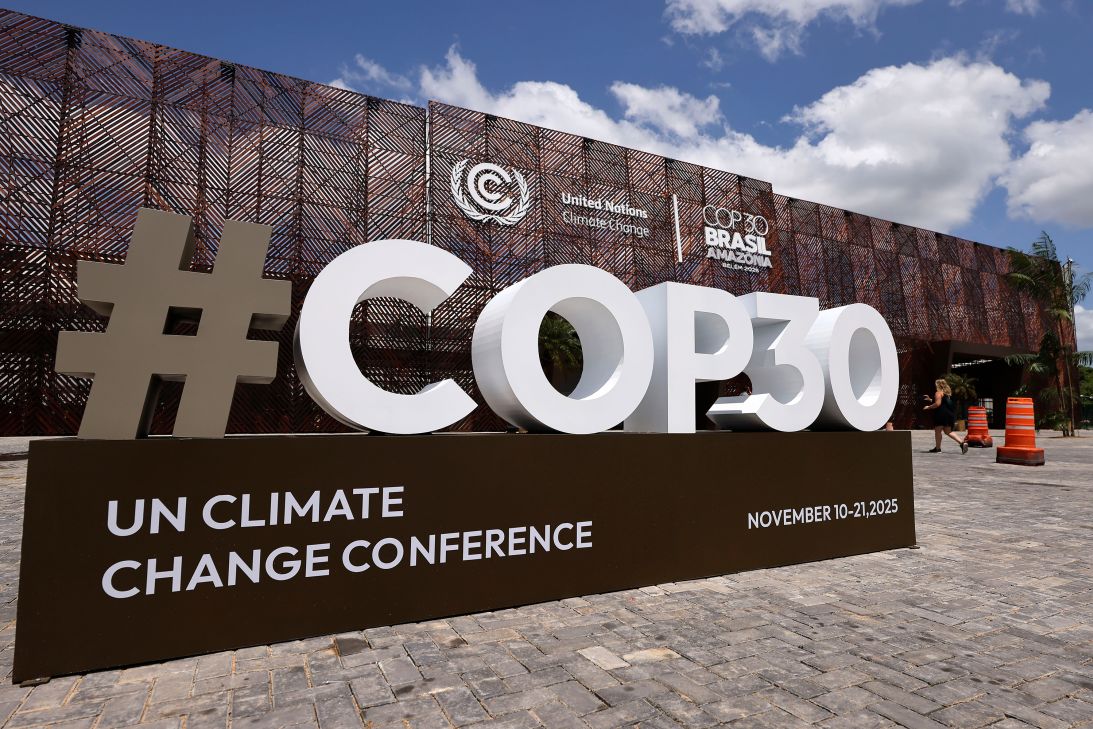
Kenya and Somalia have been named among the world’s strongest performers in aligning food systems with national climate commitments, according to a new global assessment released at the COP30 climate summit in Belém, Brazil.
The Food Systems NDC Scorecard, published by animal protection non-profit Mercy For Animals on November 17, 2025, evaluated how countries’ Nationally Determined Contributions (NDCs) integrate food production, distribution, consumption and waste into their climate strategies.
The report highlights that although food systems generate roughly one-third of all human-caused greenhouse gas emissions, most countries’ NDCs continue to overlook major areas such as diets, food loss and waste.
In contrast, Kenya and Somalia stand out for embedding climate-resilient agriculture and food security measures at the centre of their plans.
Somalia emerged as one of the highest-scoring countries globally, receiving 11 out of a possible 12 points for what researchers described as “very strong integration” of food systems into climate adaptation and resilience efforts.
The country’s NDC outlines actions spanning food production, processing, distribution, and consumption, with a clear focus on reducing food loss and improving nutrition.
However, the assessment noted a gap in dedicated measures to address food waste.
The report underscores Somalia’s vulnerability to climate shocks, citing six failed rainy seasons since 2000 that have wiped out livestock, destroyed crops and displaced millions.
With over eight million people facing food insecurity, the country has allocated 32 per cent of its adaptation budget, equivalent to $1.9 billion, to agriculture, livestock and fisheries.
Its NDC positions climate-resilient agriculture as essential for sustaining livelihoods, strengthening food security, and supporting long-term peacebuilding.
Kenya was also recognised as a top-tier performer, with strong provisions linking food production and climate adaptation.
The country’s NDC commits to boosting climate-smart agriculture, addressing food insecurity, and enhancing resilience across rural communities.
Kenya’s progress places it alongside global frontrunners such as Switzerland, underscoring its growing leadership in shaping climate-resilient food systems.
The findings contrast sharply with countries ranked at the bottom of the scorecard, including Brazil and New Zealand.
Brazil was singled out for having some of the weakest food system integration, despite the sector accounting for nearly 75 per cent of its national emissions.
The report warns that global emissions from food systems alone could push warming beyond the 1.5°C threshold even if fossil fuel emissions were halted immediately.
Researchers behind the assessment stress that governments must widen their scope beyond agricultural production to include diets, food distribution, and waste if the world is to meet its climate goals.
“Countries that weave food systems into their climate agendas prove that ambition and inclusivity go hand in hand,” said Amelia Linn, director of global policy at Mercy For Animals.