
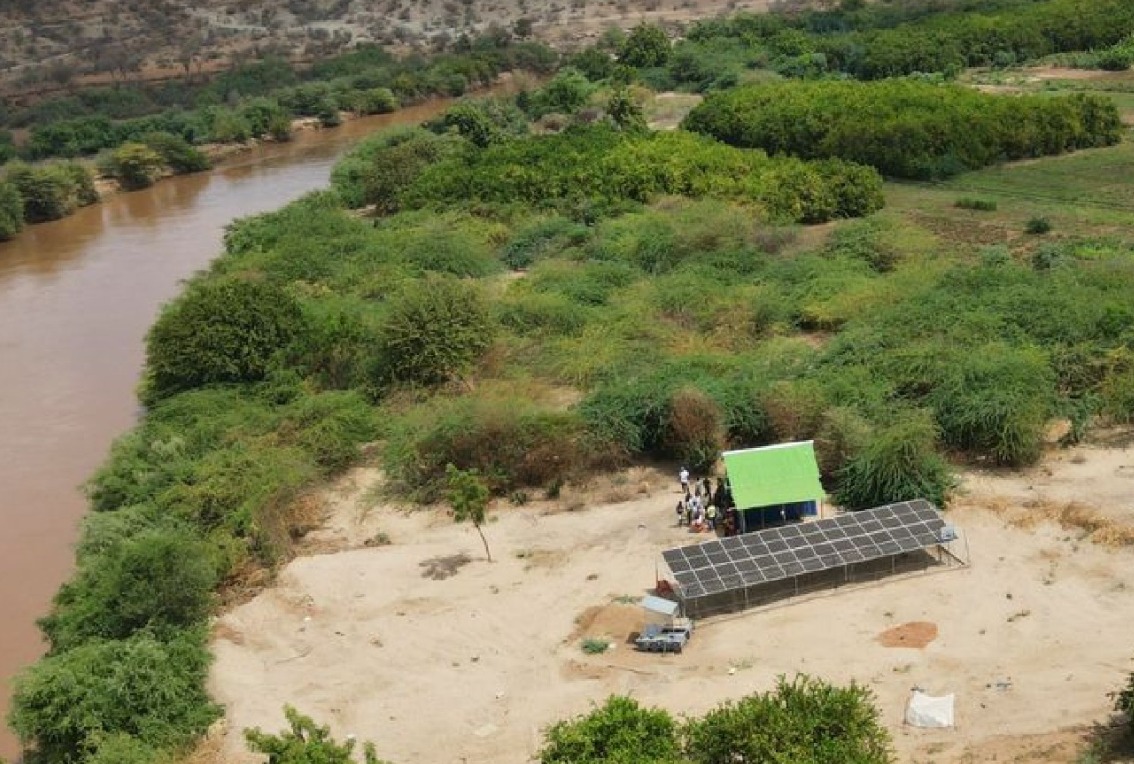
Farmlands along the Juba and Daua riverine corridors in Dollow and Beled-Hawa Districts are experiencing a major revival following years of decline caused by silt accumulation, invasive Prosopis plants, and the rising cost of diesel-powered irrigation.
Large tracts of fertile land had remained abandoned, leaving farm owners with limited options to restore productivity or attract labour due to high operational costs and low incentives.
The BORESHA-NABAD programme, funded by the Delegation of the European Union to Kenya and co-funded by Denmark in Kenya, is now transforming this landscape through a combination of sustainable irrigation, land restoration, and inclusive farming partnerships.
Implemented by DRC Somalia in close coordination with Natural Resource Management Committees, the initiative is enabling farm owners and vulnerable community members to jointly reclaim and cultivate long-abandoned land.
A central success of the programme is the facilitation of contract farming and crop-sharing agreements between 10 farm owners and 345 individuals from marginalised households, including women, youth, displaced persons, and people with disabilities.
Under this structure, farm owners provide land, irrigation access, and solar-powered pump maintenance, while farmers contribute labour and crop management.
Profits are shared based on clear, mutually agreed roles, strengthening trust, productivity, and predictable income streams.
To ease the burden of irrigation, BORESHA-NABAD has installed 10 solar-powered floating pumps across the targeted riverine farms, drastically reducing reliance on costly diesel engines.
The new system provides a steady and affordable water supply, making restored land viable for cultivation year-round.
The programme has also integrated a Cash-for-Work initiative, providing short-term income to 610 individuals while simultaneously supporting land clearance, soil rehabilitation, and the development of productive assets.
As a result, 610 acres of previously idle farmland have now been reclaimed.
Looking ahead, the initiative is preparing farmers for sustainable growth through planned training on Climate-Smart Agriculture and Good Agricultural Practices delivered by government extension officers.
Participants will also gain access to certified seeds through local agrovets, strengthening input markets and improving crop quality.
With irrigation costs reduced, technical knowledge expanding, and collaboration between landowners and farmers deepening, the BORESHA-NABAD programme is laying the foundation for a more resilient, productive, and inclusive riverine farming system, one that is poised to support long-term food security and rural livelihoods in both districts.