
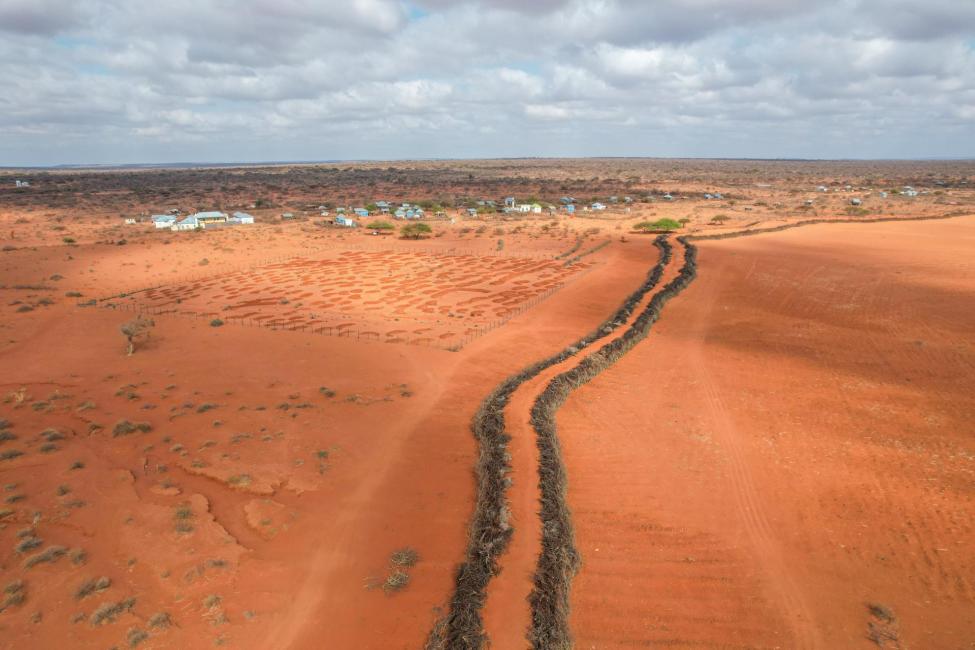
In the once flood-ravaged village of Harqabobe, hope now flows where destruction once reigned.
For years, the community in Somalia’s Middle Shabelle region battled the extremes of nature, fierce floods that swept away homes and farms, followed by months of relentless drought and sandstorms that stripped the land bare.
Today, that cycle has been broken. Through a partnership between the International Organisation for Migration (IOM) and Somali non-profit Shaqadoon, with funding from the European Union, the people of Harqabobe have transformed their vulnerability into resilience by harnessing the power of nature itself.
“When it rained, we used to worry what might come from the valley,” recalls Huria, a resident.
“Would the water rise while we slept? Would it come without warning on a clear day?”
Those fears are now fading. Instead of fighting the floods, the community has learned to work with them.
With IOM’s technical support, residents built flood regulation structures along the valley’s dry riverbed, or wadi, redirecting excess water toward farmland instead of homes.
What was once a channel of destruction now nourishes their crops.
“We constructed barriers to guide the water to our fields,” explains Mahdi, a community member who helped organize the works.
“Now, the floods help our crops grow instead of washing them away.”
Beyond flood control, the initiative has sparked a wave of environmental restoration.
Working with Shaqadoon, residents planted belts of drought-hardy trees to act as windbreaks, reducing the sandstorms that once battered their homes.
These trees, which require minimal watering, now stabilize the soil and protect farmland from erosion.
Training has also been at the heart of Harqabobe’s transformation. Community members learned about tree planting, water management, and land conservation, enabling them to take the lead in maintaining their environment.
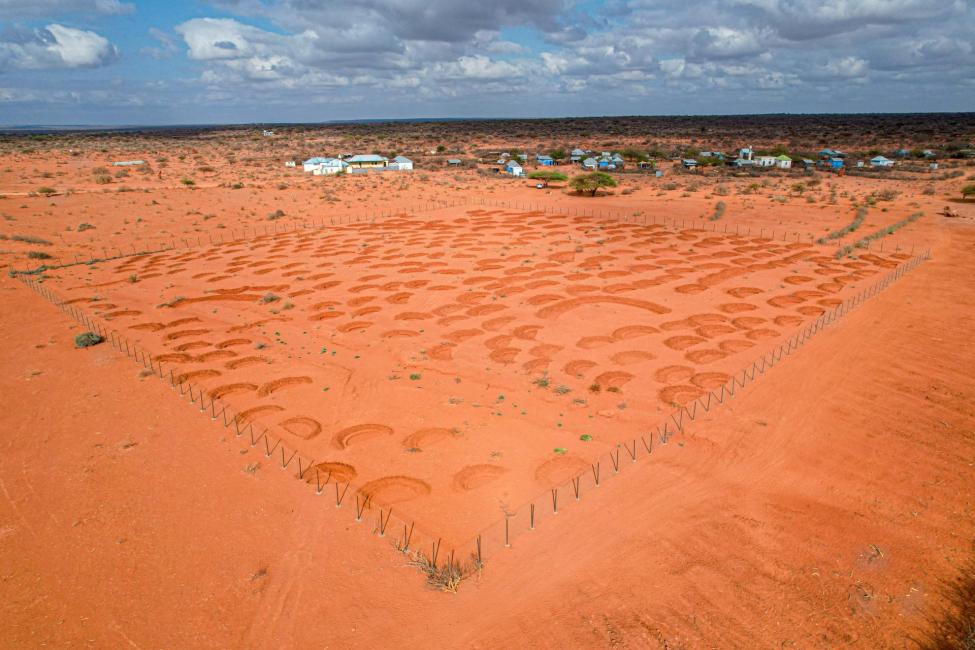
Using this knowledge, they dug half-moon basins, semi-circular trenches designed to slow and capture rainwater, and introduced drought-resistant vegetation to improve soil health.
At a pilot site built with IOM’s support, bioswales, small, natural channels that trap runoff, now prevent soil erosion and support new vegetation growth.
These simple, locally led solutions have transformed the landscape and revived community livelihoods.
Equally important is the inclusive approach that has guided the project.
Women, youth, and elders all took part in planning and implementation, fostering unity and shared responsibility.
“We worked together, learned together, and made decisions together,” says Mahdi.
“Now the water that once divided us brings us together.”
For residents like Mohamed, the change is deeply personal.
“In the past, we feared floods would drive us away again. Now, we feel hope instead,” he says.
“We have learned to live with the land, not against it.”
The visible results speak for themselves. Floodwaters now spread gently across fields, nourishing crops.
Trees calm the wind and reduce dust. The soil holds moisture long after the rains have stopped.
Families who once fled their homes have returned, rebuilding their lives in newfound stability.