
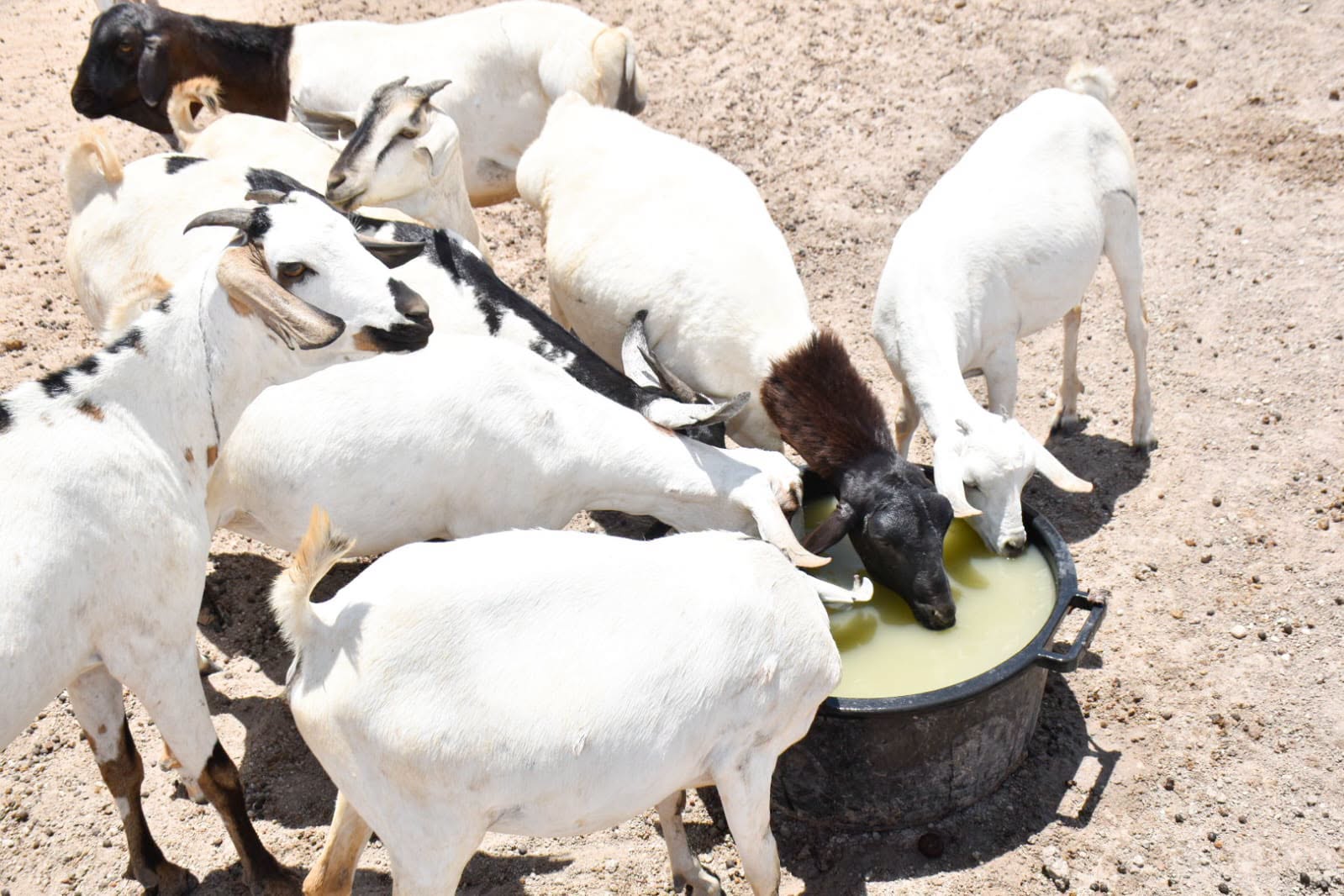
Garissa’s Rigdam water project will provide reliable water to 800 households and more than 11,000 livestock daily across Maalimin and Modogashe wards.
The Sh25 million NDMA project combines a 17,600-cubic-metre water pan, borehole pipeline, solar-powered pump and water kiosks to strengthen year-round water access.
The project is expected to reduce reliance on water trucking while strengthening drought resilience, supporting livestock and improving livelihoods in the arid region.
Residents of Maalimin and Modogashe wards in Garissa County are set to benefit from improved and more reliable access to water following the launch and handover of the Sh25 million Rigdam water project.
The project, implemented by the National Drought Management Authority (NDMA) with support from the European Union, combines a 17,600-cubic-metre water pan with an eight-kilometre borehole pipeline supplying water to villages in the area.
According to NDMA Chief Executive Officer Col (rtd) Hared Adan, the infrastructure is expected to provide water to at least 800 households and more than 11,000 livestock every day, easing the pressure on communities that have for years relied on water trucking and long journeys in search of water.
The Rigdam project includes a solar-powered water pump, a high-capacity diesel generator, two water kiosks and a chain-link fence around the water pan.
The combination of surface water storage and groundwater infrastructure is intended to provide a more dependable supply across different seasons.
Speaking during the official handover of the project to the community, Adan said the government deliberately incorporated the water pan and borehole to supplement each other and ensure that residents have access to water throughout the year.
“The government used to do water trucking year in, year out in this stretch, but by doing this investment here, the community has a reliable water infrastructure to cover the whole year,” Adan said.
He described the project as a high-impact investment because of its central location and its ability to serve communities in both Modogashe and Maalimin wards.
“This is a very high-impact project that addresses the issue of water in this area by serving at least 800 households and more than 11,000 livestock every day. It is also in a centralised location, supporting both the Modogashe and Maalimin wards,” he said.
With the project now handed over to the community, NDMA has urged residents to take responsibility for protecting the infrastructure to ensure it remains operational and benefits households and livestock over the long term.
Adan cautioned that vandalism and burglary could undermine the investment and leave the community facing the same water challenges the project was designed to address.
“My request to the community is that this is your water infrastructure. The government has put up this project for you to protect it for the purpose of sustainability. We are going to train the community on how to manage this infrastructure,” he said.
The planned community training is expected to strengthen local management of the facility and promote ownership of the water infrastructure.
For residents of Rigdam village, the new water infrastructure represents a major change after years of walking long distances to access water.
Hussein Mohamed Mohamud, an elder in the village, said residents had previously been forced to walk more than 10 kilometres in search of water, with some losing livestock because of thirst.
He described the Rigdam project as a lifesaver for the community and a sustainable source of water within the village.
“Before this project, we were suffering a lot because of lack of water. With this project, we have had a steady supply of water. From May this year, we have been using the water from this pan together with our livestock,” Mohamud said.
The availability of water closer to the community is expected to reduce the time and resources households spend searching for water while also supporting livestock-dependent livelihoods.
The Rigdam project is part of wider efforts to strengthen drought resilience in arid and semi-arid areas by investing in infrastructure that can provide water beyond emergency interventions.
NDMA said the project demonstrates how sustainable water infrastructure can strengthen drought resilience and improve livelihoods by addressing the needs of both households and livestock.
The authority continues to work with communities and development partners to deliver water solutions designed to respond to the needs of populations living in drought-prone areas.
The project also illustrates a shift from repeated emergency water trucking towards longer-term infrastructure capable of supporting communities throughout the year.
As the region prepares for enhanced rains associated with El Niño conditions, Adan urged communities in arid and semi-arid areas to maximise the benefits of rainfall by harvesting and storing water while taking precautions against flooding.
He encouraged residents to make full use of available rainwater and existing water infrastructure, while avoiding areas vulnerable to flooding.
“We expect enhanced rains as a community, and this has advantages and disadvantages for us. Our water facilities are going to impound almost 100 per cent of all our open-source water facilities; let us maximize the use of that water,” he said.
At the same time, he warned residents and motorists against approaching areas with water runoffs and rivers that could become dangerous during heavy rainfall.
“On the other hand, as we drive, let us avoid areas where there are water runoffs and rivers within this area that are likely to flood so that we protect ourselves,” he added.
The Rigdam project comes at a critical time for communities whose livelihoods are closely linked to livestock and whose access to water can be severely affected during prolonged dry periods.
By combining a large-capacity water pan with a borehole pipeline, the project is designed to provide an additional layer of water security while reducing dependence on emergency water supply measures.
For the 800 households and more than 11,000 livestock expected to benefit daily, the infrastructure provides a more accessible and sustainable source of water while strengthening the community's ability to cope with future drought conditions.
The NDMA said continued collaboration with communities and partners will remain important in ensuring that water investments are protected, properly managed and able to deliver lasting benefits.
The Rigdam project therefore represents not only an investment in water access but also in drought resilience, livestock productivity and the livelihoods of communities in Garissa's arid environment.