
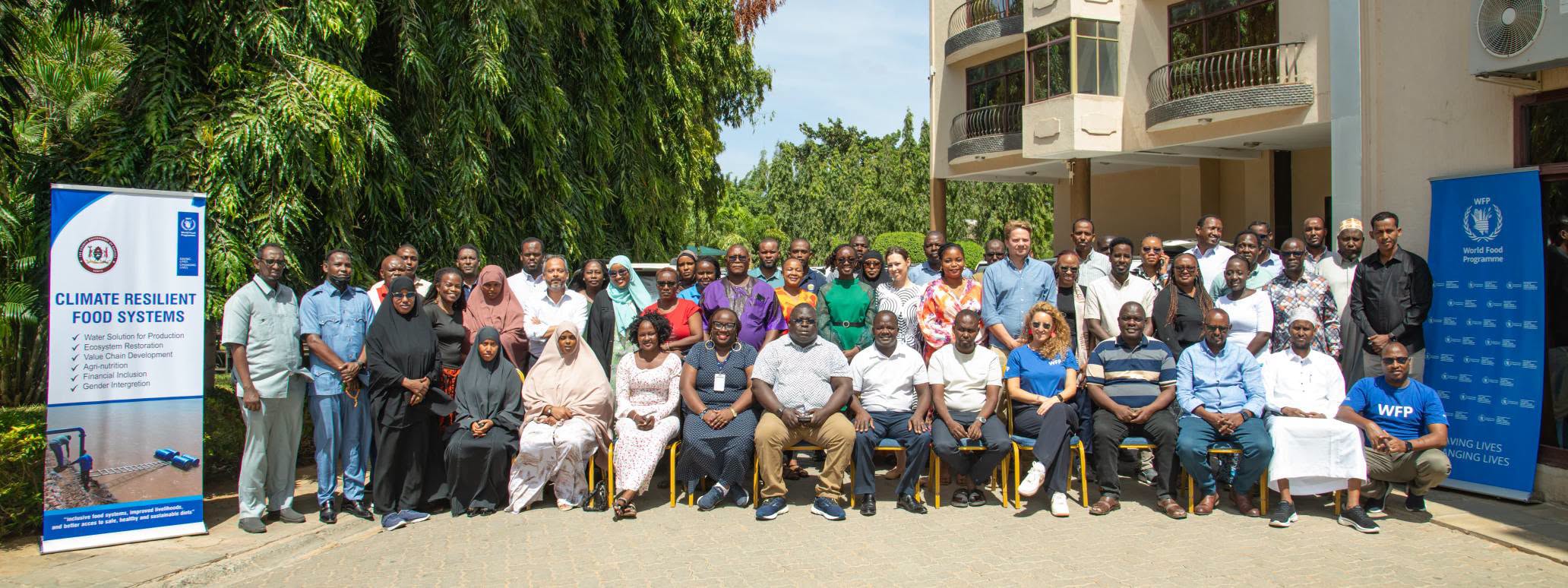
Garissa and Tana River County Governments have joined WFP and other stakeholders in consultations to shape the organisation’s next four-year strategy for Kenya, with a focus on local priorities and emerging needs.
The two counties highlighted food security, nutrition, climate resilience, livelihoods, disaster preparedness, markets, school feeding, and youth and skills development during consultations on WFP’s Country Strategic Plan 3.
The consultations aim to ensure county-level experiences and priorities inform WFP’s engagement in Kenya from July 2027, strengthening collaboration on food security, resilience and sustainable livelihoods.
The County Governments of Garissa and Tana River have joined the World Food Programme (WFP) and other stakeholders in consultations to shape the organisation’s next four-year strategy for Kenya.
The two counties participated in a two-day local consultation on the WFP Country Strategic Plan 3 (CSP3), providing county-level perspectives and experiences to inform the development of the strategy that will guide WFP’s engagement in Kenya from July 2027.
The consultations brought together officials from various departments of the two county governments, WFP Area and Field Office teams, cooperating partners, non-governmental organisations, local organisations, UN agencies and other stakeholders.
The consultations provided an opportunity for Garissa and Tana River to outline priorities affecting communities across the two counties, particularly in areas linked to food security, livelihoods and climate resilience.
Participants reviewed lessons and experiences from the implementation of the current WFP strategy before examining emerging needs and priorities that could shape the organisation’s future interventions.
Among the issues discussed were food security, nutrition, climate resilience, livelihoods, disaster preparedness, food systems, markets, school feeding, youth development and skills development.
The broad range of priorities reflects the interconnected challenges facing communities in the two counties, where food security and livelihoods are closely linked to climate conditions, access to markets, natural resources and disaster preparedness.
The Garissa delegation was led by Chief Officer for Crop Production Ahmed Muktar Shidiye, while the Tana River delegation was led by Acting County Secretary and CECM for Livestock and Agriculture Mwanajuma Hiribae.
Their participation provided county governments with a platform to bring local experiences into discussions on the future direction of WFP programmes in Kenya.
The involvement of officials from different county departments also allowed stakeholders to consider food security and resilience from multiple sectors, including agriculture, livestock, nutrition, social protection and natural resource management.
Food security emerged as a key area of discussion during the consultation, alongside efforts to strengthen livelihoods and improve communities’ ability to withstand shocks.
Climate resilience was also among the emerging priorities considered by participants. For counties such as Garissa and Tana River, where communities rely heavily on climate-sensitive livelihoods, strengthening resilience is an important component of longer-term food security and economic stability.
The discussions also covered disaster preparedness, reflecting the need for communities and institutions to strengthen their capacity to anticipate and respond to emergencies.
Participants further examined food systems and markets, recognising the role of market access and functioning food systems in supporting livelihoods and improving access to food.
WFP is a key development and humanitarian partner to both Garissa and Tana River County Governments.
The partnership covers a wide range of areas, including food security and livelihoods, nutrition, climate resilience, disaster risk management, water and natural resource management, social protection and school feeding.
The collaboration also extends to support for refugee and host communities as well as emergency response.
The breadth of the partnership has provided the counties and WFP with experience that can inform the formulation of the next strategic plan.
Beyond immediate food and nutrition concerns, participants also identified youth and skills development among the priorities requiring attention under the next strategy.
The inclusion of youth development reflects the importance of creating sustainable livelihood opportunities and strengthening skills that can enable young people to participate more effectively in local economies.
Discussions around livelihoods, markets and skills development therefore provide an opportunity to consider longer-term solutions alongside humanitarian and food assistance.
The consultation is part of the process of developing WFP Country Strategic Plan 3, which will guide the organisation’s engagement in Kenya beginning in July 2027.
By involving county governments and local stakeholders, the process seeks to incorporate experiences and priorities from communities and institutions working directly on the ground.
For Garissa and Tana River, the consultation offers an opportunity to ensure that county-specific challenges and priorities are reflected in the future strategy.
The engagement also allows WFP and its partners to review lessons from existing programmes and identify areas where future interventions can respond more effectively to emerging needs.
As the strategy development process continues, the input from Garissa, Tana River and other stakeholders is expected to contribute to a framework addressing food security, nutrition, livelihoods, resilience and other priorities across Kenya.
The counties’ participation underscores the importance of collaboration between national and county governments, UN agencies, development partners, civil society and local organisations in developing strategies that respond to the realities faced by communities.