
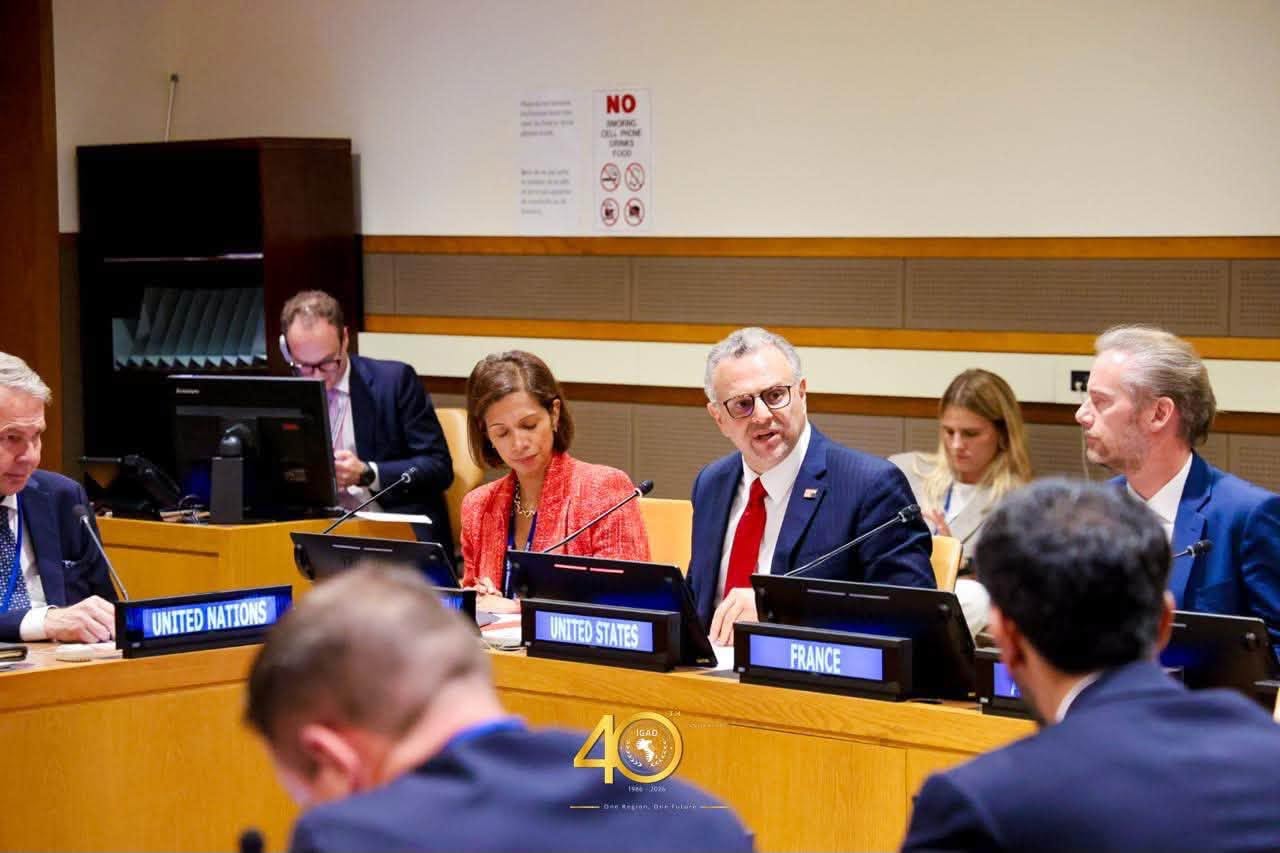
IGAD Executive Secretary Dr Workneh Gebeyehu has called for renewed international efforts to end Sudan’s war, urging global actors to place the Sudanese people at the centre of peace and humanitarian initiatives.
Workneh urged international actors to support de-escalation and unite behind a Sudanese-led and Sudanese-owned peace process as millions continue to face hunger, displacement and disrupted essential services.
IGAD is calling for coordinated regional and international diplomacy focused on protecting civilians, expanding humanitarian access and creating conditions for a sustainable political settlement in Sudan.
The Intergovernmental Authority on Development (IGAD) has called for renewed international efforts to end the war in Sudan, urging global actors to place the Sudanese people at the centre of peace and humanitarian initiatives as the country's crisis continues to deepen.
IGAD Executive Secretary Dr Workneh Gebeyehu appealed while speaking at a High-Level Ministerial Meeting on Sudan convened by France and its partners, where international stakeholders discussed efforts to address the conflict and its devastating humanitarian consequences.
Workneh warned that Sudan remains at the centre of one of the world's most severe humanitarian emergencies, with millions of people requiring assistance and large numbers displaced by the ongoing fighting.
The IGAD Executive Secretary called for the de-escalation of the conflict and a unified, Sudanese-led and Sudanese-owned peace process.
He argued that international initiatives should converge around a single pathway towards a political settlement rather than pursuing fragmented approaches.
“Speaking at the High-Level Ministerial Meeting on Sudan convened by France and partners, I called on all international actors to place the Sudanese people at the centre of all efforts, support the de-escalation of the conflict and unite behind one Sudanese-led and Sudanese-owned peace process,” Workneh said in a statement shared on his X account.
The appeal reflects IGAD's continued emphasis on regional and international cooperation to help create conditions for an end to hostilities and a political resolution to the conflict.
The conflict, which began in April 2023 between the Sudanese Armed Forces (SAF) and the Rapid Support Forces (RSF), has had severe consequences for civilians across the country.
According to the figures cited by IGAD, 33.7 million people require humanitarian assistance, while Sudan continues to face major hunger and displacement challenges.
Fighting has disrupted essential services, including health care, food systems and education, while forcing millions of people to flee their homes.
The scale of displacement and food insecurity has placed enormous pressure on humanitarian organisations and neighbouring countries hosting people who have crossed Sudan's borders in search of safety.
The crisis has also complicated efforts to deliver assistance to communities affected by the fighting, with humanitarian access remaining an important concern.
Workneh also warned that climate-related pressures could further compound the humanitarian situation.
Flooding and drought pose additional risks to communities already affected by conflict, displacement and food insecurity.
The interaction between conflict and climate-related shocks can increase pressure on livelihoods and essential services, particularly for vulnerable communities.
For IGAD, addressing these overlapping challenges requires humanitarian action to be accompanied by sustained diplomatic efforts aimed at ending the conflict.
At the ministerial meeting, Workneh urged international actors to ensure that the needs and interests of Sudanese civilians remain central to diplomatic and humanitarian initiatives.
His appeal comes as international stakeholders continue to explore avenues for ending the fighting and creating conditions for negotiations.
Concerns have also been raised over external involvement in the conflict and the supply of military support to the opposing sides.
UN Secretary-General António Guterres has previously called for accountability for countries contributing to the conflict through military support, underscoring wider international concerns over the continuation of the war.
The role of external actors remains part of broader diplomatic discussions surrounding the conflict, alongside efforts to improve humanitarian access and protect civilians.
For IGAD, a coordinated approach involving regional and international actors is important to supporting a sustainable resolution to the conflict.
The regional bloc has continued to engage with stakeholders on Sudan, seeking to promote dialogue and diplomatic efforts aimed at ending hostilities.
Workneh's latest appeal places particular emphasis on avoiding fragmented peace initiatives and supporting a common Sudanese-led pathway toward a political settlement.
Such an approach, IGAD argues, should focus on de-escalating violence, protecting civilians and creating space for humanitarian assistance and political dialogue.
As the war continues, expanding humanitarian access remains a critical concern.
Millions of Sudanese people depend on humanitarian assistance, while conflict and insecurity have disrupted the delivery of essential services in affected areas.
IGAD's call therefore combines the need for diplomatic action with the immediate requirement to support vulnerable populations.
The regional organisation has emphasised that efforts to end the conflict should also create conditions for humanitarian organisations to reach communities in need and for essential services to gradually recover.
Workneh's intervention at the ministerial meeting reinforces IGAD's call for a political solution to the Sudan conflict.
The regional body is urging international partners to support de-escalation and unite behind a peace process led and owned by Sudanese stakeholders.
As diplomatic efforts continue, the humanitarian situation remains a central concern, with tens of millions requiring assistance and communities facing the combined effects of conflict, displacement, hunger and climate-related shocks.
IGAD says coordinated regional and international diplomacy, centred on the Sudanese people, is essential to creating conditions for an end to the fighting and a sustainable political settlement.