
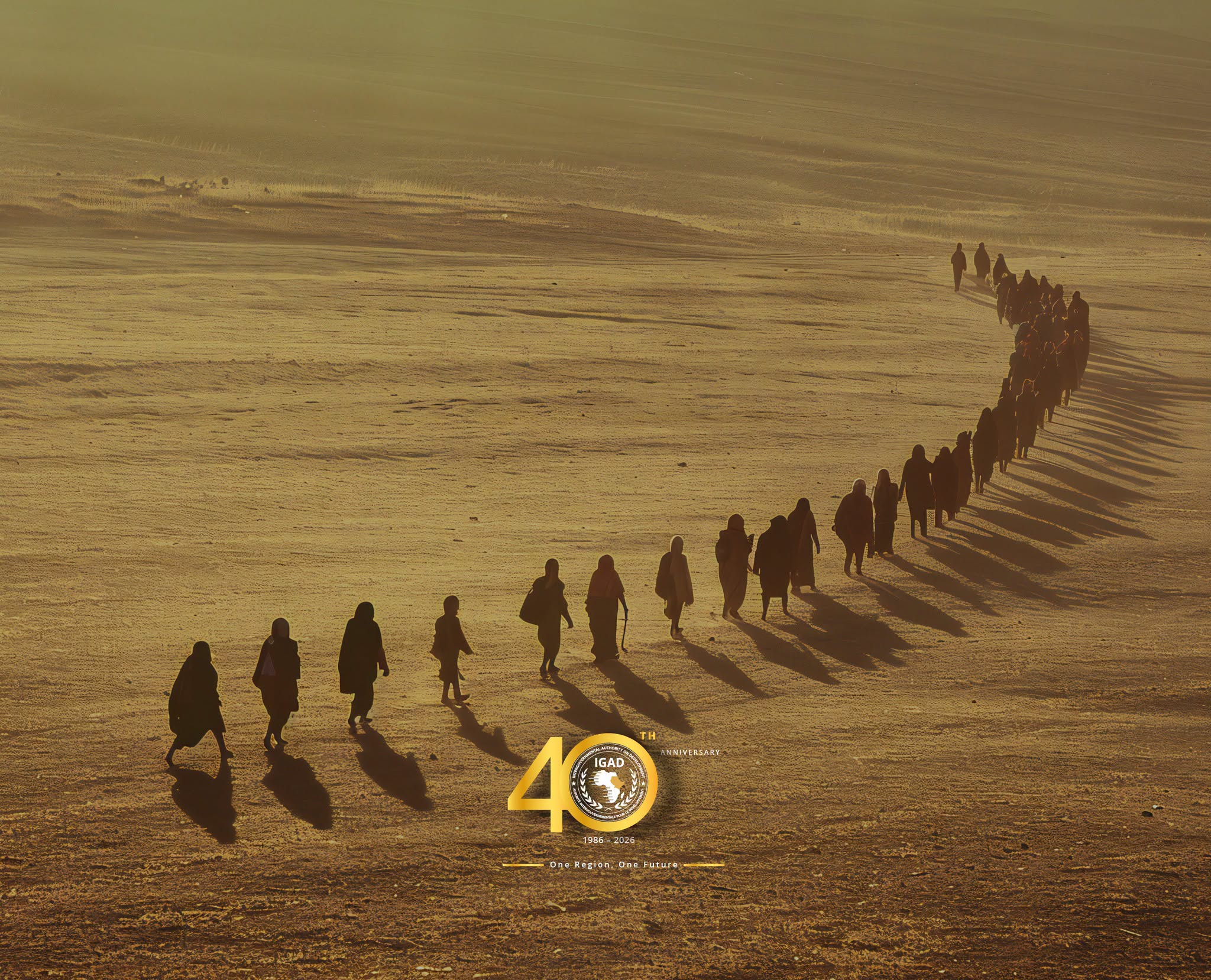
The Intergovernmental Authority on Development (IGAD) is intensifying regional efforts to protect refugees and support host communities following a sharp rise in forced displacement across the region over the past nine years.
According to IGAD, the number of refugees hosted across the region increased from 2.3 million in 2015 to 4.7 million in 2024. This represents a 104 per cent increase and highlights the growing humanitarian and development challenges facing Member States.
The Intergovernmental Authority on Development (IGAD) is intensifying regional efforts to protect refugees and support host communities following a sharp rise in forced displacement across the region over the past nine years.
According to IGAD, the number of refugees hosted across the region increased from 2.3 million in 2015 to 4.7 million in 2024. This represents a 104 per cent increase and highlights the growing humanitarian and development challenges facing Member States.
The figures reflect more than a statistical trend. Behind them are millions of individuals and families who have been forced to leave their homes in search of safety, stability and opportunities to rebuild their lives.
Many refugees have lost their homes, livelihoods and access to essential services. Their displacement has also placed additional pressure on host communities, particularly in areas where local resources and public services were already constrained.
Despite these challenges, countries across the IGAD region have continued to provide refuge to millions of people affected by conflict, insecurity and other crises. Communities hosting refugees have also played an important role by sharing limited resources and providing displaced populations with space to rebuild their lives.
IGAD is working closely with Member States, development partners, humanitarian organisations and other stakeholders to strengthen the region’s collective response to forced displacement.
The organisation’s approach places protection, dignity and opportunity at the centre of interventions targeting refugees and other displaced populations.
Under the message “Protection Today. Dignity and Opportunity Tomorrow,” IGAD is calling for responses that go beyond providing immediate humanitarian assistance. The regional body is encouraging long-term solutions that allow displaced people to regain their independence, participate in economic and social life and contribute to the development of their host communities.
Regional cooperation is especially important because forced displacement often extends beyond national borders. A crisis in one country can have far-reaching consequences for neighbouring states, requiring coordinated policies, shared information and joint interventions.
Through its regional platforms and partnerships, IGAD is supporting Member States in strengthening refugee protection systems, improving coordination and advancing policies that respond to both the immediate and long-term needs of displaced people.
IGAD has emphasised that effective responses to forced displacement must address the needs of refugees alongside those of the communities hosting them.
The rapid growth in the refugee population has increased demand for housing, healthcare, education, water, sanitation, employment and other essential services. When host communities are excluded from humanitarian and development interventions, competition over limited resources can deepen vulnerability and create social tensions.
A people-centred response therefore requires investments that benefit both refugees and local residents. These may include stronger public services, livelihood opportunities, social protection, infrastructure and programmes that promote peaceful coexistence.
Supporting host communities also recognises the significant responsibility they carry in accommodating displaced populations, often for extended periods. It can strengthen social cohesion while ensuring that refugee protection remains sustainable.
Beyond emergency protection, IGAD is advancing durable solutions designed to help displaced people regain stability and build sustainable futures.
Such solutions may involve creating conditions for safe and voluntary return, supporting meaningful local integration or facilitating other appropriate pathways. They also require greater access to education, employment, skills development, financial services and social protection.
The focus on dignity and opportunity reflects a shift from treating refugees only as recipients of humanitarian assistance to recognising them as individuals with skills, aspirations and the capacity to contribute to their communities.
This approach is particularly important in situations of prolonged displacement, where refugees may spend years away from their places of origin. Without opportunities for education and livelihoods, prolonged displacement can deepen poverty, dependency and social exclusion.
IGAD’s 2025 Annual Report notes that the region continues to operate in a complex environment characterised by conflict, climate shocks, food insecurity, displacement and fiscal pressures. These interconnected challenges have increased vulnerability and placed greater demands on governments, humanitarian agencies and development partners.
Despite these pressures, IGAD says it has continued to strengthen regional cooperation, institutional resilience and the delivery of transformative programmes. Its work combines regional dialogue, technical support, evidence-based decision-making and coordination with Member States and partners.
The doubling of the refugee population demonstrates the need for sustained international solidarity and predictable financing. Member States and host communities cannot address the scale of displacement alone.
Development and humanitarian partners will therefore remain critical in expanding services, supporting livelihoods and strengthening national and regional systems for refugee protection.
IGAD’s message is clear: protecting people forced to flee is an immediate humanitarian responsibility, but enabling them to live with dignity and pursue meaningful opportunities is equally essential.
As displacement continues to affect millions of people across the region, stronger cooperation among governments, communities and partners will be necessary to translate protection into lasting stability, dignity and hope.