
IOM warns that El Niño conditions could trigger a displacement crisis across the Horn of Africa, urging countries to strengthen preparedness and act early.
IOM is calling for stronger cross-border coordination and anticipatory action as the Horn of Africa prepares for heavy rains and flooding linked to El Niño.
IOM Deputy Regional Director Nihan Erdogan urges IGAD countries to “Act Early, Act Together and Act for the Long Term” to protect communities at risk of displacement.
The International Organisation for Migration (IOM) has warned that the anticipated El Niño conditions in the Greater Horn of Africa could quickly translate into a displacement crisis, calling for early action, stronger preparedness systems and closer cross-border cooperation.
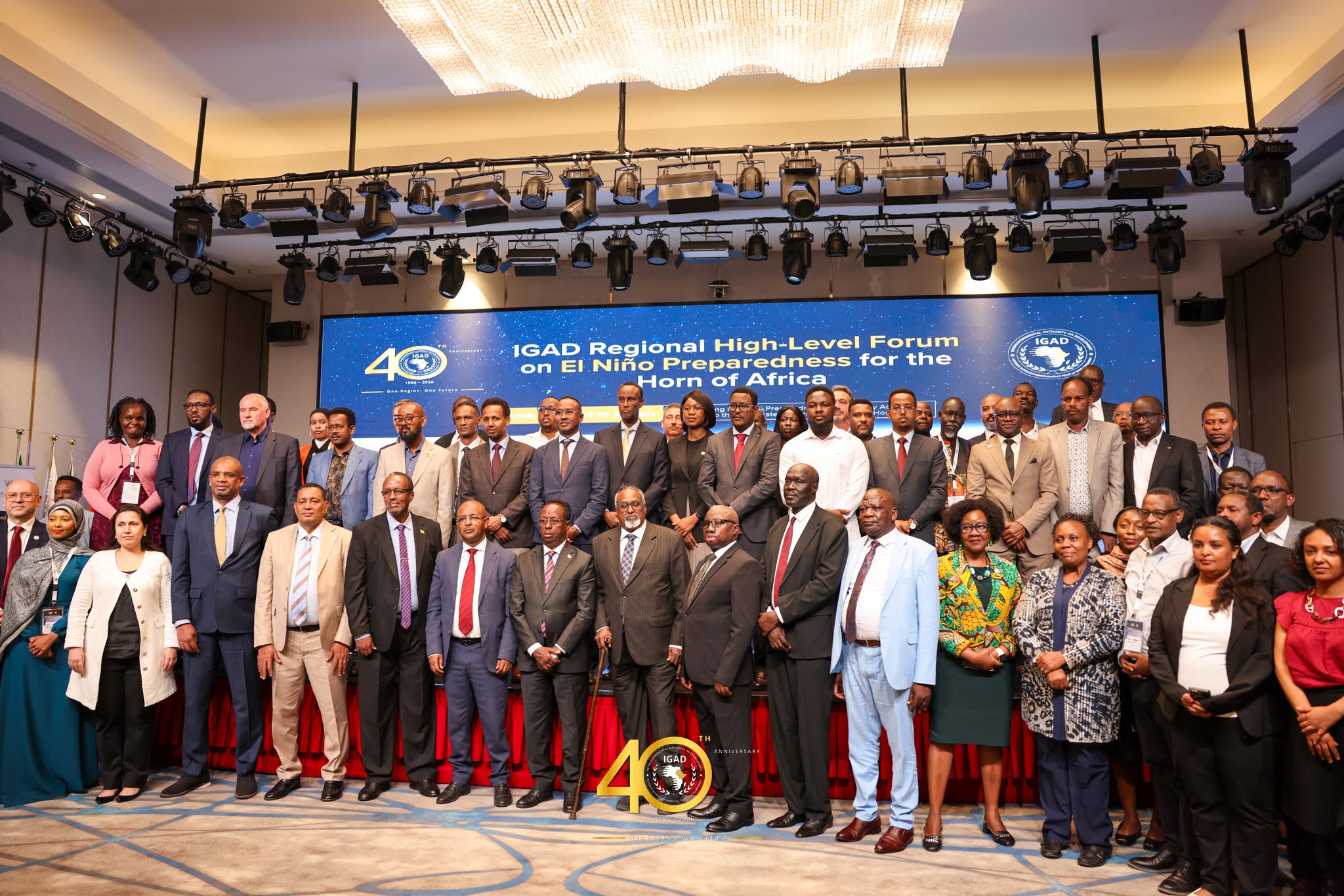
Speaking at the IGAD Regional High-Level Forum on El Niño Preparedness in Ethiopia, IOM Eastern and Horn of Africa Deputy Regional Director Nihan Erdogan said governments and humanitarian partners have a rare opportunity to act before the impacts of the forecast weather conditions materialise.
Her warning comes as countries in the IGAD region prepare for potentially heavy rains and increased flood risks during the October–December 2026 season. IGAD has called on member states to activate national anticipatory action frameworks and update contingency plans ahead of the season.
Erdogan said the availability of a forecast should allow governments and partners to move beyond reacting to disasters after they occur.
“We meet today because we have been given something that is often rare in a crisis environment and that is a forecast,” she said.
She noted that the region has experienced both seasons of extreme rainfall and severe drought, providing lessons that should inform preparations for the months ahead.
According to Erdogan, the success of the regional forum should therefore not be measured simply by the knowledge available to participants, but by how effectively that information is translated into collective action.
“The measure of this forum’s success will not be what we know because we have the forecast but whether what we have learnt from the previous experiences and how we will act collectively,” she said.
The call comes as IGAD and its partners seek to strengthen early warning and anticipatory action systems across the region. IGAD's latest high-level call to action commits member states to updating contingency plans, clarifying evacuation and humanitarian access arrangements and pre-positioning essential supplies ahead of potential climate shocks.
IOM is placing human mobility at the centre of regional preparedness efforts, warning that climate-related hazards can force communities to leave their homes when floods, damaged infrastructure, loss of livelihoods and other impacts make areas unsafe or difficult to inhabit.
Erdogan said preparedness should recognise that El Niño is not simply a meteorological event.
“Allow me to say that there's one thing that sits at the core of our preparedness for El Niño and that is the fact that it is not just a climate event but it is also a mobility and displacement crisis in the making,” she said.
She described displacement as a predictable consequence that governments and humanitarian agencies should prepare for rather than respond to only after communities have been forced to move.
The warning is consistent with recent regional assessments. IOM's displacement projections for Somalia, for example, identify flooding as a major potential driver of displacement during the October–December period and call for strengthened flood preparedness and contingency planning.
Erdogan summarised IOM's message to governments and partners through three imperatives: Act Early, Act Together and Act for the Long Term.
Acting early means using available forecasts to trigger preparedness measures before heavy rains and flooding affect communities. This includes strengthening early warning systems, preparing evacuation arrangements, pre-positioning relief supplies and identifying populations and locations most exposed to flooding.
Acting together calls for closer coordination among governments, regional institutions, humanitarian organisations and development partners. The need is particularly important in border areas, where climate-related mobility can cross national boundaries.
Acting for the long term means ensuring that preparedness is not limited to a single rainy season but contributes to stronger systems capable of managing repeated climate shocks.
IGAD has similarly emphasised the need for regional responses to regional challenges, with member states committing to stronger anticipatory action and resilience measures ahead of the El Niño season.
The high-level forum brought together IGAD member states, climate experts, IOM and other United Nations agencies to assess preparedness and translate seasonal forecasts into concrete action.
Discussions have focused on readiness assessments, contingency planning, coordination and measures to protect communities facing heightened risks from flooding and other climate-related hazards.
The regional approach reflects the fact that climate shocks do not stop at national borders. Flooding, displacement, livestock movements, disruption of livelihoods and humanitarian needs can affect communities across neighbouring countries simultaneously.
IGAD has also been strengthening coordination on human mobility in the context of disasters and climate change. In September, the regional body convened government agencies, technical experts and partners in Djibouti to improve coordination on climate-induced mobility and strengthen institutional preparedness.
The region's experience with previous El Niño events and other climate extremes has underscored the importance of preparedness.
For humanitarian agencies, acting before a crisis escalates can help reduce the disruption caused by flooding and other hazards while protecting livelihoods and essential infrastructure.
IOM has emphasised the importance of learning from previous seasons rather than treating each disaster as an isolated event.
For IGAD member states, this means using existing climate forecasts and early warning information to inform decisions on disaster risk management, humanitarian preparedness, health, agriculture, livestock and population movement.
The latest IGAD call to action includes measures such as protecting roads, bridges and health facilities, strengthening health surveillance for flood-related diseases, providing farming advisories, supporting livestock vaccination and managing grazing to protect food systems.
The emphasis on anticipatory action comes at a time when the region is already facing multiple humanitarian pressures, including conflict, food insecurity, displacement and climate-related shocks.
IGAD's September Council of Ministers communiqué noted that the region was facing significant levels of acute food insecurity and internal displacement while also highlighting the wetter-than-normal conditions expected during the October–December 2026 season as El Niño strengthens.
Against this backdrop, humanitarian actors say preparedness must account not only for immediate flooding but also for the wider consequences of climate shocks, including disruption of livelihoods and increased movement of people.
The objective is to ensure that communities at risk receive support before hazards become full-scale humanitarian emergencies.
For IOM, this requires governments and partners to treat mobility and displacement as integral parts of climate preparedness rather than issues to be addressed only after disasters occur.
As the Greater Horn of Africa enters the October–December season, the message from the regional preparedness forum is therefore clear: forecasts provide an opportunity, but their value depends on what governments and partners do with the information.
For Erdogan and IOM, the region's preparedness will ultimately be measured by whether lessons from previous climate shocks are converted into coordinated action before communities are forced to move.
Act early. Act together. Act for the long term.