
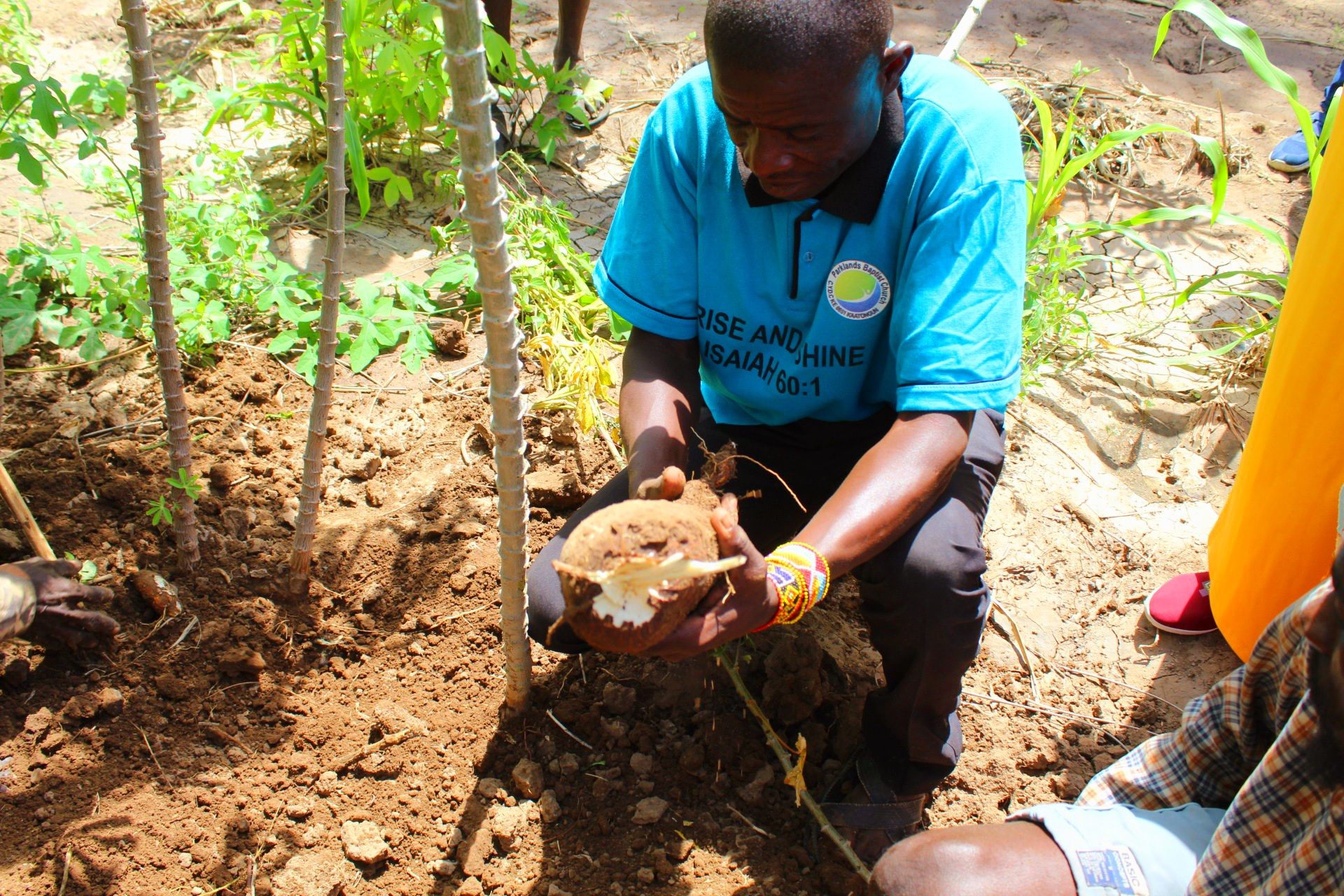
A newly established farming group in Lomekwi, Turkana County, has begun applying climate-smart agricultural practices aimed at improving food production and strengthening livelihoods in the region’s dryland environment.
The initiative follows training conducted by World Relief Kenya to equip group members with practical knowledge and farming techniques suited to Arid and Semi-Arid Lands (ASALs).
A newly established farming group in Lomekwi, Turkana County, has begun applying climate-smart agricultural practices aimed at improving food production and strengthening livelihoods in the region’s dryland environment.
The initiative follows training conducted by World Relief Kenya to equip group members with practical knowledge and farming techniques suited to Arid and Semi-Arid Lands (ASALs).
The training focused on helping the farmers understand how locally appropriate agricultural practices can support crop production despite limited rainfall and other climatic challenges.
After completing the learning sessions, the farmers moved from theory to practice by planting crops and applying the knowledge gained during the training. Their action represents an important step towards building a more reliable and sustainable source of food and income for their households and the wider community.
Farming communities in Turkana frequently face challenges associated with prolonged drought, unpredictable rainfall, water scarcity and environmental degradation. These conditions make conventional farming difficult and often expose households to food insecurity and the loss of livelihoods.
By adopting agricultural approaches designed for dryland conditions, the Lomekwi group is exploring how communities can make better use of available resources while adapting to an increasingly changing climate.
As part of the initiative, the farmers also received a practical demonstration of Zaipit technology, an innovative approach intended to support agriculture in ASAL areas. The demonstration provided members with an opportunity to learn how appropriate technologies can help improve farming outcomes in places where water and productive land are limited.
The hands-on approach enabled participants to understand the technology and consider how it could be incorporated into their farming activities. Such locally relevant innovations are increasingly important in supporting communities to produce food, protect their livelihoods and reduce vulnerability to climate-related shocks.
With planting completed, the group is now waiting for the crops to germinate. While the initiative is still in its early stages, the farmers’ transition from training to implementation demonstrates their willingness to adopt new practices and take an active role in strengthening household and community resilience.
World Relief Kenya noted that resilience in dryland communities is built through practical knowledge, locally appropriate solutions and opportunities for people to put what they have learned into action.
The initiative also highlights the importance of combining training with practical demonstrations and continued community participation. Providing information alone may not be enough to transform livelihoods; farmers also require opportunities to practise new skills, access suitable technologies and receive support as they adapt farming methods to local conditions.
The Lomekwi group’s efforts could contribute to improved food availability, diversified livelihoods and greater confidence among community members seeking alternatives to traditional sources of income. Successful crop production may also encourage more households to explore agriculture as a viable livelihood activity in the drylands.
Beyond supporting food production, climate-smart agriculture can help communities strengthen their capacity to prepare for and respond to drought and other environmental pressures. It can also complement pastoralism by providing additional sources of food and income, reducing the risks associated with dependence on a single livelihood.
The progress of the newly formed group will be closely linked to the performance of the crops and the farmers’ continued application of the practices introduced during the training. However, the planting exercise already represents a significant first step towards translating knowledge into tangible community action.
As the farmers wait for germination, their work reflects growing efforts across Turkana County to identify practical and sustainable ways of strengthening food systems in dryland environments.
The Lomekwi initiative demonstrates that building resilience begins at the community level—with relevant knowledge, appropriate technology and the determination to turn training into action.