
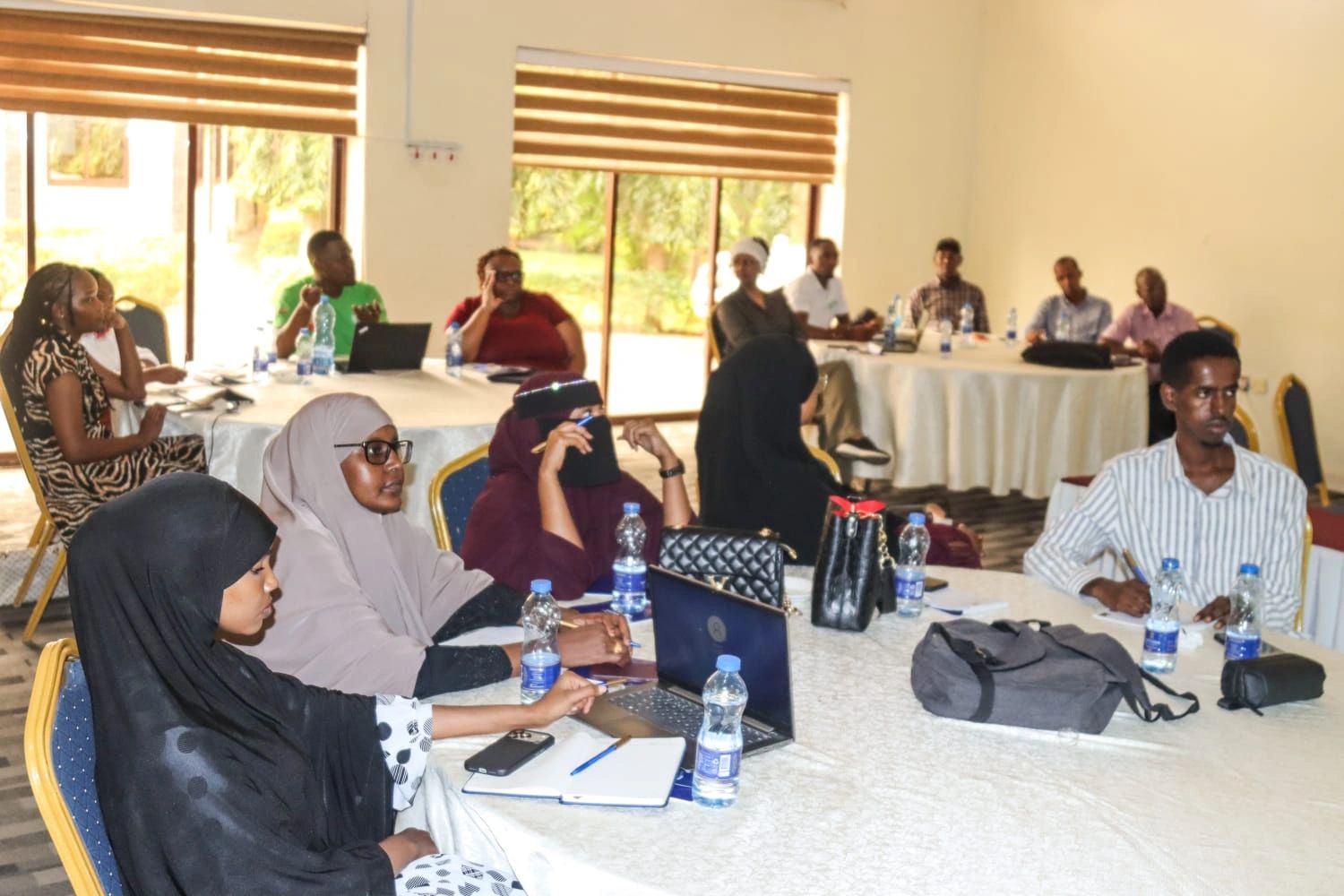
Stakeholders in Garissa have convened for a two-day workshop focused on strengthening climate and disaster finance governance and locally led humanitarian action.
The workshop is examining financing, governance and accountability gaps while developing advocacy priorities to improve humanitarian funding managed by local actors.
Oxfam Kenya and the Institute of Public Finance are bringing stakeholders together to promote stronger local systems, accountability and sustainable humanitarian responses.
Stakeholders in Garissa have convened for a two-day workshop aimed at strengthening climate and disaster finance governance while promoting locally led humanitarian leadership in Kenya.
The County Strategic Workshop on Climate and Disaster Finance Governance and Locally Led Humanitarian Leadership is bringing together stakeholders to examine gaps in financing, governance and accountability and develop shared advocacy priorities for improving responses to climate and humanitarian risks.
The workshop is jointly convened by the Institute of Public Finance (IPF) and Oxfam Kenya, with funding from the Government of the Netherlands.
The meeting is centred on the recognition that effective humanitarian action depends on strong local systems and meaningful participation by local actors.
Participants are expected to use collective learning and evidence-based dialogue to identify challenges affecting climate and disaster finance governance and explore practical approaches to addressing them.
The discussions are also intended to strengthen accountability in the management of climate and disaster resources while ensuring that humanitarian responses are better aligned with the needs and priorities of affected communities.
A key focus of the workshop is increasing the quality of humanitarian funding managed by local actors in Kenya.
The organisers are seeking to develop a shared agenda that can support greater transparency, accountability and effectiveness in humanitarian financing.
By examining existing financing and governance gaps, stakeholders aim to identify advocacy priorities and opportunities for improving how resources reach communities facing climate-related and humanitarian risks.
Oxfam Kenya emphasised the importance of empowering local actors with the resources, authority and capacity required to lead humanitarian responses.
Local organisations and institutions are often positioned close to communities and have knowledge of local needs, risks and response mechanisms. Strengthening their leadership can therefore contribute to more locally responsive and sustainable humanitarian action.
The Garissa workshop provides a platform for stakeholders to discuss how local leadership can be supported through stronger systems, better financing and improved accountability.
Through joint discussions and evidence-based engagement, the two-day meeting seeks to build consensus around priorities for strengthening climate and disaster finance governance.
Stakeholders are expected to develop advocacy priorities that can support improved governance and accountability while advancing locally led approaches to humanitarian response.
The workshop also provides an opportunity for participants to share experiences, identify systemic challenges and explore areas for collective action.
The discussions in Garissa highlight the connection between financing, governance and the ability of local actors to respond effectively to crises.
For locally led humanitarian action to be sustainable, stakeholders emphasise the need for resources to be accompanied by appropriate authority, institutional capacity and accountability mechanisms.
The workshop therefore seeks to move beyond discussions on funding alone by examining the broader systems required to ensure that climate and disaster financing contributes to effective and accountable responses.
As climate-related and humanitarian risks continue to place pressure on communities, strengthening local systems remains an important part of preparedness and response efforts.
The Garissa workshop is expected to contribute to a common agenda for improving climate and disaster finance governance and strengthening the role of local actors in humanitarian action.
By bringing stakeholders together around evidence, shared learning and joint advocacy, the organisers aim to support a more accountable and locally led humanitarian response system in Kenya.