
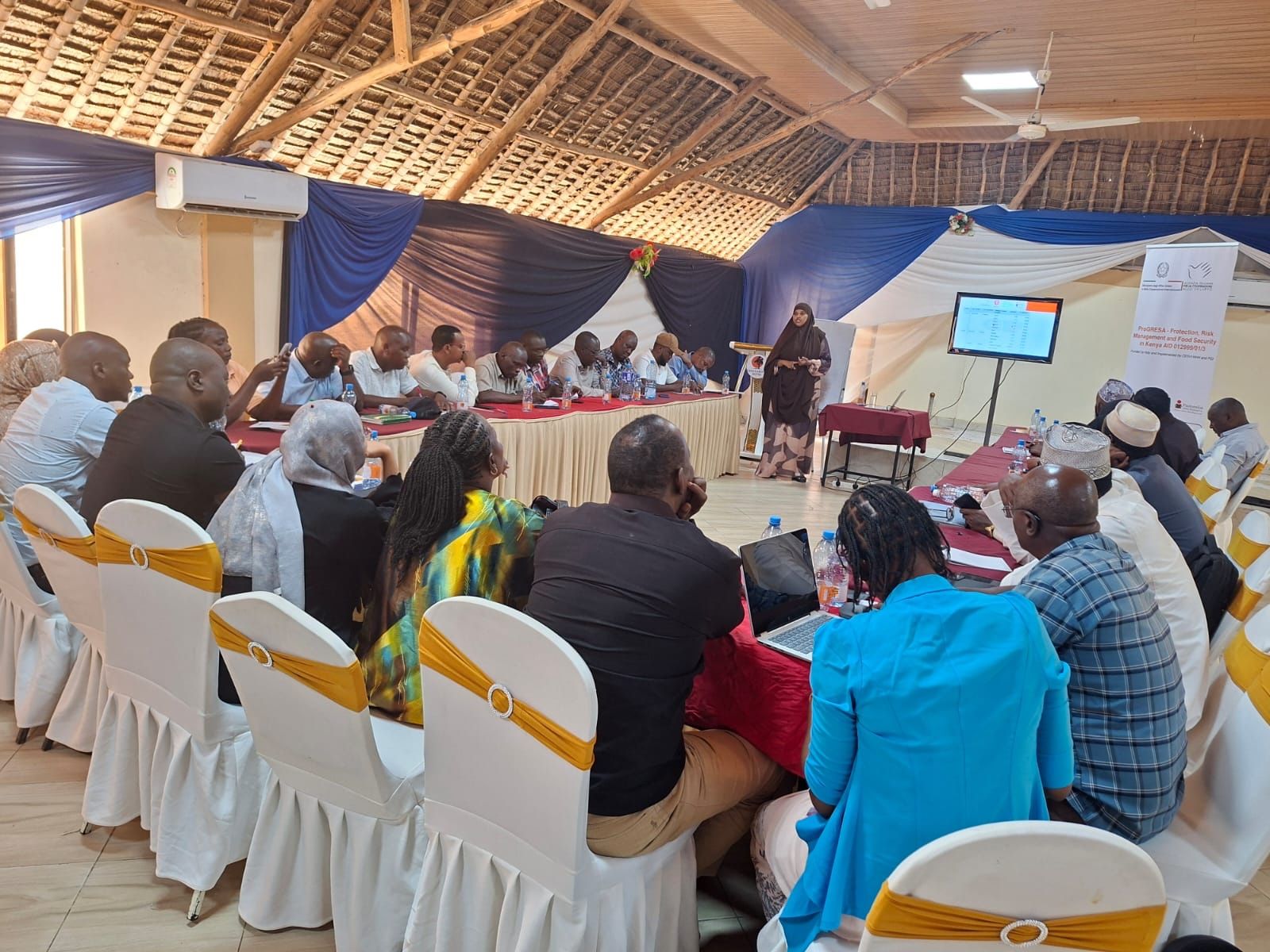
The Pastoralist Girls Initiative (PGI) has strengthened the capacity of frontline service providers to identify protection concerns and connect vulnerable people with essential support services through a two-day training held at Tana Garden Hotel in Garissa.
Organised under the ProGRESA Project, the training brought together service providers from Tana North, Bura East and Dadaab to enhance their knowledge and practical skills in case identification and referral systems.
The Pastoralist Girls Initiative (PGI) has strengthened the capacity of frontline service providers to identify protection concerns and connect vulnerable people with essential support services through a two-day training held at Tana Garden Hotel in Garissa.
Organised under the ProGRESA Project, the training brought together service providers from Tana North, Bura East and Dadaab to enhance their knowledge and practical skills in case identification and referral systems.
The initiative recognised that effective protection systems depend on frontline personnel who can recognise cases of abuse, exploitation, neglect and other forms of vulnerability and respond appropriately. Participants were equipped with the skills needed to identify cases, assess protection concerns and make safe, timely and appropriate referrals.
The training also focused on strengthening coordination between service providers and relevant institutions. Effective referral systems are essential in ensuring that women, girls and other vulnerable community members can access services such as healthcare, psychosocial support, legal assistance, protection and other forms of specialised care.
The sessions were facilitated by the Regional Director of the National Gender and Equality Commission and the Tana River County Gender Director. Drawing on their experience, the facilitators guided participants through the principles and procedures of case identification, safe referral and survivor-centred support.
Participants also strengthened their understanding of the roles played by various actors within the protection system. This is expected to improve collaboration, reduce gaps in service delivery and ensure that vulnerable individuals are connected to the appropriate support without unnecessary delays.
PGI delivered the training in partnership with CESVI and Welthungerhilfe Kenya, funded by the Italian Agency for Development Cooperation. The collaboration reflects the importance of coordinated action between government institutions, civil society organisations, development partners and community-based service providers in addressing protection challenges.
Women and girls in pastoralist and displacement-affected communities can face heightened protection risks, including gender-based violence, exploitation, discrimination and limited access to essential services. These challenges are often compounded by poverty, displacement, insecurity, harmful social practices and long distances to service centres.
Building the capacity of frontline service providers is therefore crucial to ensuring that protection concerns are recognised early and handled safely and professionally. Well-trained personnel can serve as an important link between vulnerable community members and the institutions responsible for providing care, justice and protection.
Beyond improving individual skills, the training is expected to strengthen and make more responsive protection structures across Tana North, Bura East and Dadaab. Participants can apply the knowledge gained within their respective institutions and communities, helping to create a more coordinated system of prevention, reporting and response.
The initiative further demonstrates that investments in frontline workers can have an impact long after a training session ends. By improving knowledge, strengthening referral pathways and building relationships among service providers, the ProGRESA Project is helping establish sustainable systems capable of protecting women, girls and vulnerable populations.
Through continued collaboration and capacity building, PGI and its partners aim to ensure that people facing protection risks are identified promptly, treated with dignity and connected to the assistance they need.