
Women-led Taleh Farm in Garissa’s Sabena Ward is helping 62 households diversify their livelihoods through irrigated crop production and climate-smart farming.
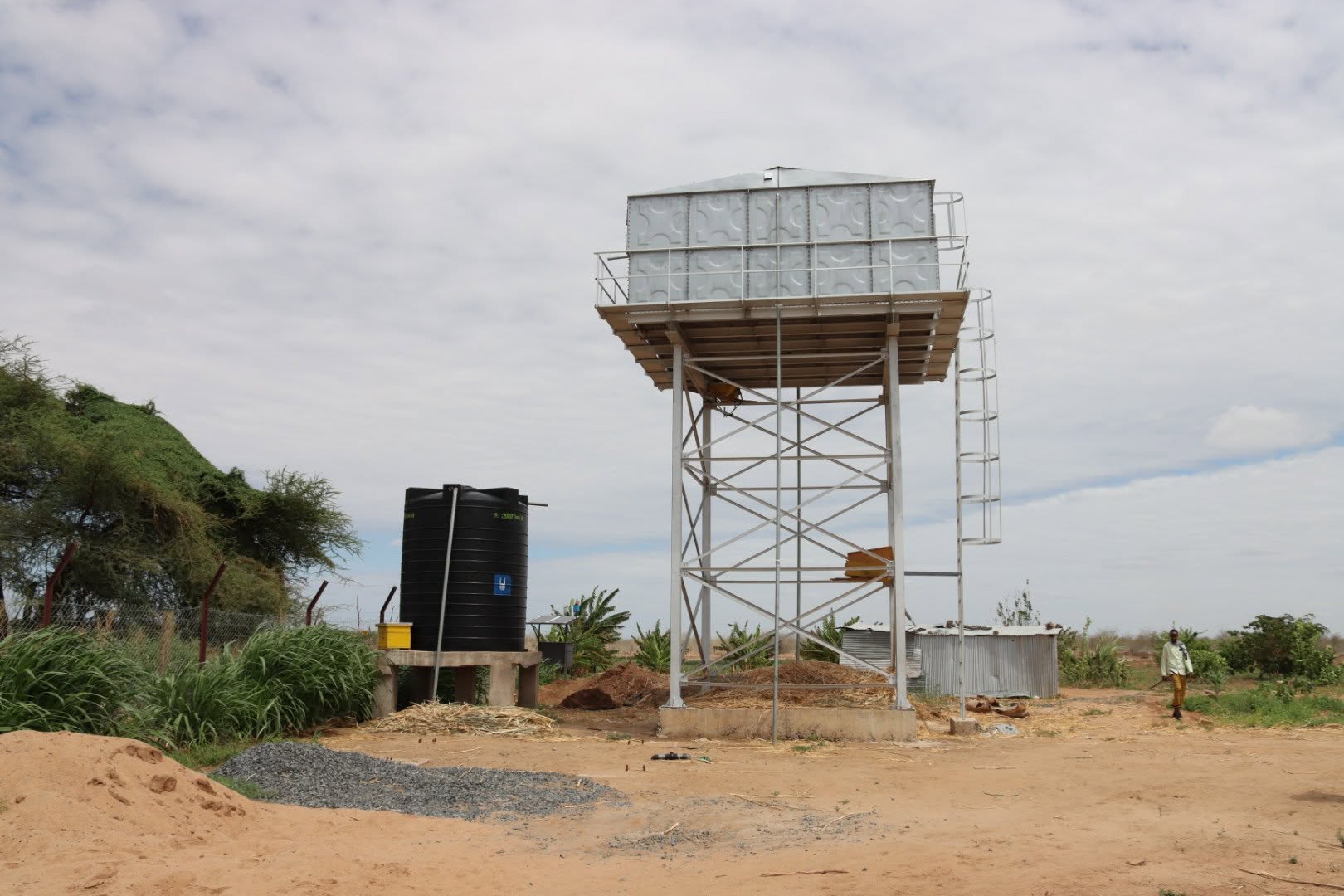
NDMA has supported the farm with a 50,000-litre water storage tank, a hybrid irrigation system, a pipeline extension and a solar-powered perimeter fence.
The initiative is strengthening food security and income opportunities while empowering women through training in governance, irrigation management and financial literacy.
A women-led farming initiative in Sabena Ward, Garissa County, shows how investing in productive assets can help drought-affected communities diversify their livelihoods, strengthen food security, and build resilience to climate-related shocks.
Taleh Farm supports 62 households in diversifying their food and income sources through irrigated crop production, giving participating families an alternative to livelihoods highly vulnerable to drought.
The initiative, supported by the National Government through the National Drought Management Authority (NDMA), combines irrigation infrastructure, climate-smart agricultural practices and capacity building to strengthen the ability of local households to produce food and generate income even in a drought-prone environment.
The Taleh Farm initiative is anchored on investments designed to provide the community with reliable water and protect agricultural production.
Government support has included the installation of an elevated 50,000-litre water storage tank and extension of a pipeline to the farm. A hybrid irrigation system powered by both solar energy and a generator has also been installed to support crop production.
The infrastructure is intended to provide a more reliable water supply for farming while reducing dependence on rainfall, which can be unpredictable in arid and semi-arid areas such as Garissa.
The project also incorporates climate-smart agricultural practices aimed at helping farmers make more efficient use of available resources while improving the sustainability of crop production.
At the heart of the initiative is its women-led approach, which seeks to expand women's participation in the management of productive assets and household economic activities.
Through Taleh Farm, women farmers are gaining opportunities to participate more actively in decisions around farming, irrigation and the management of income-generating activities.
The initiative is also providing capacity building for women farmers in governance, irrigation management and financial literacy.
These skills are intended to strengthen the farmers' ability to manage the project effectively, make informed financial decisions and ensure that the productive assets continue benefiting participating households.
Greater involvement of women in productive assets can also contribute to stronger household resilience by expanding the number of people actively engaged in food production and income generation.
For the 62 participating households, irrigated agriculture provides an opportunity to diversify beyond traditional livelihood activities and create additional sources of food and income.
The availability of water for crop production allows farmers to cultivate crops with greater consistency, potentially improving household food supplies while creating opportunities to generate income from agricultural produce.
The approach is particularly important in drought-affected communities where prolonged dry conditions can undermine agricultural and livestock-based livelihoods.
By investing in irrigation infrastructure and farming skills, the Taleh Farm initiative seeks to give households productive assets that can continue supporting their livelihoods beyond individual drought-response interventions.
The project has also incorporated measures to protect agricultural production from livestock and wildlife intrusion.
A solar-powered perimeter fence has been installed around the farm to safeguard crops and reduce the risk of damage from animals.
Protecting the crops is an important component of ensuring that investments in irrigation, seeds, farming labour and other agricultural inputs translate into actual food and income benefits for participating households.
The combination of water infrastructure, irrigation technology and crop protection therefore provides a broader support system for the farmers.
The Taleh Farm initiative places climate-smart practices at the centre of its agricultural activities.
For communities living in drought-prone areas, improving the efficiency and sustainability of agricultural production is critical to reducing vulnerability to recurring climate shocks.
The use of hybrid solar and generator-powered irrigation provides farmers with an alternative source of energy for water supply, while the storage tank provides additional capacity to manage water for farming.
Together with farmer training, these investments are designed to strengthen the community's capacity to sustain production and make better use of available resources.
NDMA Chief Executive Officer Hared Adan Hassan recently interacted with beneficiaries of the initiative, listening to their experiences and observing how the investments are translating into productive livelihoods.
The engagement provided an opportunity to assess the impact of the interventions directly from the households benefiting from the project.
The initiative reflects NDMA's broader approach of supporting communities in drought-prone areas with investments that go beyond emergency assistance and help build longer-term resilience.
Rather than relying solely on short-term responses during periods of drought, productive asset investments can provide communities with infrastructure and skills that enable them to generate food and income and strengthen their ability to cope with future shocks.
Taleh Farm demonstrates the potential of community-based agricultural investments to strengthen household resilience in areas affected by recurrent drought.
For the 62 households involved, the initiative offers an opportunity to combine food production with income generation while increasing women's participation in managing productive assets.
The infrastructure and training provided through the project are expected to support the continued development of irrigated agriculture at the farm and improve the capacity of participating households to manage their livelihoods.
As climate pressures continue to affect communities in arid and semi-arid areas, investments such as Taleh Farm provide a pathway towards more diversified and sustainable livelihoods.
The initiative underscores the importance of combining infrastructure, skills development, women's economic participation and climate-smart practices in efforts to build resilient communities.
Taleh Farm therefore stands as an example of how targeted investment in productive assets can help drought-affected households move towards greater food and income security while strengthening the role of women in local economic development.